
IJCNC 05
Edge-AI Enabled Fault Detection and Root Cause Analysis in Industrial Motors using Multimodal Sensor Data
Jayashree Kulkarni 1, Ramesh Kagalkar 2 and Nandini Sidnal 3
1,2,3 Department of Computer Science & Engineering,
1Graphic Era Deemed to be University, Dehradun, Uttarakhand, India,
2Nagarjuna College of Engineering and Technology, Bengaluru, Karnataka, India.
3Torrens University, Sydney, Australia
ABSTRACT
This article presents an Edge-AI enabled hybrid deep learning framework for real-time fault detection and root cause analysis in industrial motors using multimodal sensor data, containing vibration, temperature, and current signals. The proposed system leverages a CNN-LSTM model deployed on edge devices to accurately classify operational states into normal, minor, and major faults. A dataset comprising 15,000 labeled samples collected from real-world industrial setups and augmented through techniques such as SMOTE and time-warping was used for training and evaluation. In the implementation, the CNN component captures spatial patterns in sensor data, while the LSTM layer models temporal dependencies, enabling effective fault diagnosis. The proposed hybrid model achieved superior performance with 96.8% accuracy, 97.2% precision, 96.5% recall, and an F1-score of 96.8%, along with a low inference latency of ≤198 ms, demonstrating suitability for real-time edge deployment. Comparative analysis against CNN-only and LSTM-only models confirms the hybrid architecture’s advantage in fault sensitivity and prediction reliability. Additional insights from confusion matrix analysis, ROC-AUC evaluation, and fault-wise performance metrics validate the model’s robustness. The system also incorporates TinyML-based optimizations and lightweight messaging for efficient edge computing, making it a scalable solution for predictive maintenance in Industry 4.0 applications.
KEYWORD
Edge-AI, CNN-LSTM, Predictive Maintenance, Industrial Motors, Fault Detection, Multimodal Sensors
1. INTRODUCTION
Industry 4.0 marks the transition from the traditional industrial operations that integrated cyberphysical systems, IoT, and Artificial Intelligence to create smart, connected production systems. This evolution would have improved monitoring, control, and optimization of manufacturing processes so that factories would have become more responsive, adaptive, and efficient. Edge computing, in this regard, has come up as an enabler for real-time analytics and decision making. As computational intelligence is brought close to the data source, edge computing kills latency and reduces the reliance on some bandwidth-heavy cloud infrastructure, thereby guaranteeing timely response for industrial applications where it is most needed mainly in, fault detection and system diagnostics. One of the most important use cases considered in smart industrial environments is predictive maintenance, i.e., predicting the deterioration of equipment prior to its failure. Predictive maintenance, unlike scheduled and reactive maintenance, continuously monitors sensor signals and applies intelligent algorithms that detect symptoms of impending faults, be it mechanical, thermal, or electrical. This way, unplanned downtime can be avoided, routine maintenance costs removed, and the usable life of motors, an example of an industrial asset, can be prolonged.
These modern systems use the latest tools and techniques, especially deep learning frameworks, to model complex relations in high-frequency sensor data. In this respect, hybrid architecture such as CNN combined with LSTM have been found to be highly effective. CNNs extract local and spatial features from sensor signals (such as vibration or current), while LSTMs study sequential dependency and temporal dynamics within time-series data so that temporal fault patterns can be recognized. Moreover, using multimodal sensor data-vibration, temperature, and electrical curren tincreases the system’s ability to detect faults and accentuate a failure’s diverse manifestations, whether mechanical, thermal, or electrical. Hence, this comprehensive data fusion ensures more straightforward fault detection, fewer false positives, and reliable operation in various situations. To provide the basis for a complete evaluation, a hybrid dataset has been constructed consisting of 15,000 labeled samples that were obtained from both real industrial motor logs as well as synthetic augmented data. The classes of faults include bearing damage, stator overheating, load imbalance, and normal operational states.
2. LITERATURE OUTLINE
The literature survey on AI-based fault detection systems highlights significant advancements in deep learning, edge computing, and IoT-enabled diagnostics across industrial applications. Researchers have developed various models for real-time fault diagnosis, predictive maintenance, and anomaly detection. Despite progress, challenges persist in data imbalance, model interpretability, real-time deployment, and scalability. This survey helps to identify research gaps and guides future innovation in intelligent, energy-efficient, and reliable fault detection frameworks.
Leite et al. reviewed Fault detection and diagnosis (FDD) strategies in Industry 4.0 environments, emphasizing real-time automation, data interoperability, and intelligent control systems. The study identified major limitations such as lack of data standardization, integration complexity, and insufficient real-time analytics for deployment [1]. Saeed et al. introduced deep learning methods for industrial equipment health diagnostics under scarcity scenarios, reporting better fault classification but issues with model generalization, energy efficiency, and scalability [2].
Kodumuru et al. discussed the integration of Artificial Intelligence and the Internet of Things in pharmaceutical manufacturing, proposing a smart synergy to enhance process optimization, quality control, and traceability; however, their framework faces challenges in regulatory compliance, system security, and high initial deployment costs [21]. Hassani and Dackermann conducted a systematic review on advanced sensor technologies for structural health monitoring and non-destructive testing, showcasing sensor versatility and data precision while identifying gaps in environmental robustness, real-time feedback, and calibration consistency [22]. Mohandas et al. surveyed incremental deep learning strategies for industrial defect detection, emphasizing continual learning adaptability, yet highlighting persistent issues like catastrophic forgetting, data imbalance, and lack of real-world datasets [23]. Janga et al. reviewed practical AI usage in Earth sciences via remote sensing, covering terrain fault detection and geospatial data interpretation, though noting constraints related to low-resolution imagery, limited ground truth validation, and model generalization [24].
Strantzalis et al. applied Edge-AI for operational state recognition in DC motors, enabling on device inference with reduced latency, yet encountering constraints in real-time accuracy under noisy conditions and hardware resource limitations [31]. Sabry and Amirulddin reviewed fault detection techniques in industrial robots and multi-axis machines, covering AI and traditional control-based methods, while noting shortcomings in dataset availability, system-specific tuning, and real-time adaptability [32]. An et al. proposed an efficient CNN-based edge solution for realtime motor fault detection, achieving fast and accurate classification but limited by hardware compatibility and model compression complexity [33]. De las Morenas et al. examined edgebased ML methods for electrical machine fault diagnosis, emphasizing local sensory data processing while reporting problems with update latency and memory constraints in low-power devices [34]. Tian et al. explored AI-based arc fault detection using entropy and cumulants, demonstrating high sensitivity to fault initiation but challenged by algorithmic complexity and scalability in DC circuit environments [35].
Alenizi et al. introduced a taxonomy of AI technologies in Industry 4.0, categorizing classification, optimization, and prediction tasks while identifying trustworthiness, lifecycle integration, and interoperability as critical challenges [71]. Chong Chen et al. reviewed digital twins in predictive maintenance and their interaction with machine learning, providing insights into system simulation, though difficulties remain in synchronization, twin fidelity, and implementation cost [72]. Mahesh et al. proposed a deep active learning framework for intelligent bearing fault detection, showing adaptability to diverse conditions, but suffering from annotation uncertainty and model convergence instability [73]. Khan et al. explored the role of IoT in Industry 4.0 adoption, focusing on real-time data collection and control integration while identifying gaps in device interoperability, data overload, and decision-making automation [74]. Su et al. presented the ICICOS framework for integrating cloud-edge AI in industrial automation, improving control reliability but facing orchestration delays and coordination complexities across layers [75].
Habyarimana and Adebiyi revisited AI approaches for predicting electrical machine faults, comparing classical and deep learning models while noting gaps in adaptability under varying load conditions and model robustness in real-world scenarios [76]. Almazrouei et al. reviewed AI-based predictive maintenance for water injection pumps in oil and gas industries, addressing domain-specific tuning, noise mitigation, and long-term reliability but identifying gaps in dataset variability and adaptive learning [77]. Gawde et al. compiled a two-decade review on multi-fault diagnosis in rotating machinery, tracing the transition from rule based to data-driven approaches while citing limited modeling of fault interactions and system scalability [78]. Mandal et al. proposed an expert system-based decision framework for benchmarking sustainable manufacturing, enhancing strategic evaluation, but constrained by limited domain adaptability and real-time decision capabilities [79]. Chen Chang et al. provided a comprehensive survey on interpretable fault diagnosis for rotating machinery, integrating model transparency into deep learning workflows but facing trade-offs in speed, performance, and realtime applicability [80]. Khanam et al. reviewed Convolutional Neural Networks for defect detection in industrial applications, highlighting advancements in deep architectures such as ResNet and DenseNet, though interpretability, computational overhead, and generalization across domains were identified as persistent challenges [81].
Out of the extensive literature reviewed studies, only a focused subset was selected for further research consideration based on relevance, innovation, and practical feasibility. These selected papers directly address pressing industrial challenges such as real-time fault detection in resource-constrained environments, model interpretability, and deployment at the edge. They demonstrate high potential for innovation by proposing advanced methods like neural network watermarking, edge-enabled digital twins, explainable AI (XAI), and imbalanced learning strategies yet they leave notable gaps such as energy inefficiency, lack of generalization, and synchronization issues. Additionally, the chosen works span diverse industrial domains like renewable energy, oil and gas, embedded systems, and rotating machinery, making them strong candidates for scalable, cross-domain research. This focused selection ensures that future work is built upon both impactful innovation potential and clear, unresolved limitations, paving the way for meaningful and applicable advancements in intelligent fault diagnosis systems.
2.1. Overview of Findings
presents a comparative analysis of ten selected research studies relevant to AI-based fault diagnosis in industrial systems. These studies were chosen based on their methodological innovation, dataset usage, practical relevance, and identified limitations. The analysis reveals that while techniques such as CNN, LSTM, and ensemble learning demonstrate high classification accuracy (e.g., [2], [55], [66]), they often suffer from issues like high computational cost, energy inefficiency, and limited generalization to real-world edge deployments. For example, study [2] utilizes a CNN-LSTM model for fault detection using vibration and current signals, achieving good accuracy but facing scalability and performance issues in low-resource environments. Similarly, [9] addresses wind turbine diagnostics with AI-based signal processing, yet suffers from noisy sensor data and limited dataset diversity. Study [27] explores an IoT–Edge–Cloudbased digital twin platform for real-time monitoringbut is hindered by latency jitter and high deployment costs in industrial testbeds. Moreover, [30] investigates neural network watermarking for IP protection in edge-AI models, which introduces robustness concerns under adversarial conditions.
Studies like [60] and [66] tackle class imbalance and resource constraints, proposing ensemble learning and edge-optimized deep learning respectively. Notably, [80] emphasizes the importance of explainable AI (XAI) for operator trust, although it faces trade-offs between model interpretability and response time.
3. OVERVIEW OF THE SYSYTEM
The proposed system is a comprehensive Edge-AI-enabled fault detection framework designed to operate autonomously within industrial environments. It integrates multimodal sensor data acquisition, real-time inference on edge devices, and lightweight communication protocols to enable accurate and low-latency fault classification in industrial motors. This modular system is specifically tailored for predictive maintenance by minimizing reliance on cloud infrastructure and ensuring continuous operation even in resource-constrained setups.
Key Components and Functional Overview
HVAC systems for flexible deployment. Also, the design allows for expansion with more sensors or the incorporation of more advanced AI models for increasing functionality. By integrating multimodal sensors with edge-compatible deep learning, the system guarantees effective ondevice fault identification and real-time notifications through light-weight communication protocols, while ensuring minimum dependency on cloud infrastructure.
Key Components and Functional Overview
Multimodal Sensor Integration
The system utilizes a set of physical sensors that are mounted directly on industrial motors to sense various operating parameters vibration sensors (accelerometers) sense mechanical faults like bearing wear, imbalance, and misalignment; temperature sensors observe thermal activity to recognize overheating of stator windings or underload stress; and current sensors monitor electrical load fluctuation to recognize faults like short circuits, load imbalances, or rotor stalls. Synchronized integration of these sensors guarantees dense, real-time acquisition of signals and facilitates precise, early fault detection as well as comprehensive monitoring of motor condition.
On-Device Deep Learning Inference
A hybrid CNN-LSTM model is run natively on edge computing hardware like the Jetson Nano, ESP32, or Google Coral TPU, where the CNN layers learn the spatial features from segmented time-series sensor data and the LSTM layers learn the temporal dependencies to learn how anomalies evolve over time. The model is optimized using methods like quantization and pruning, using which they achieve efficient performance on resource-limited hardware without considerable loss of accuracy. This edge deployment provides low-latency (≤200ms) inference and eliminates the necessity for ongoing cloud interaction, rendering the system responsive and dependable in real-time fault diagnosis applications.
Real-Time Fault Classification and Alert
When anomalies are detected, they are categorized by the system into different classes like slight faults (e.g., incipient bearing wear or mild load imbalance), severe faults (e.g., stator overheating or mechanical failure), and normal or healthy conditions. This categorization facilitates rapid fault interpretation, following which the system sends real-time notifications through light-weight communication protocols like MQTT or HTTP to a central monitoring console or directly to the operator’s smartphone, providing timely intervention and preventing possible equipment damage or downtime.
Cloud-Optional Architecture
The system enables forwarding summarized data to the cloud for long-term storage, trend analysis, or periodic model updating, but its primary diagnostic functions like data processing, fault detection, and alertgeneration, are performed locally on the edge device. This architecture greatly minimizes bandwidth usage, secures sensitive operational data, and provides uninterrupted operation even in low-connectivity environments like remote or rural industrial plants.
Use-Case Scalability and Adaptability
The modular architecture of the system makes it easy to scale seamlessly across various industrial applications, such as differing types of motor-driven equipment and plant sizes. It can be readily diversified across domains like water pumping systems, conveyor belts, or HVAC systems for flexible deployment. Also, the design allows for expansion with more sensors or the incorporation of more advanced AI models for increasing functionality. By integrating multimodal sensors with edge-compatible deep learning, the system guarantees effective on device fault identification and real-time notifications through light-weight communication protocols, while ensuring minimum dependency on cloud infrastructure.
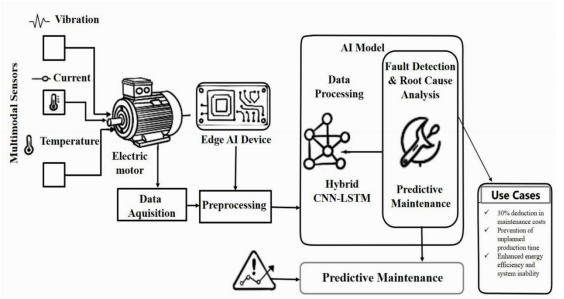
Figure 1. System architecture of the proposed Edge-AI-based fault detection framework using multimodal sensors and hybrid CNN-LSTM model
The system shown in figure 1 is an Edge-AI-based predictive maintenance system for industrial motors based on multimodal sensor data. It consists of three physical sensors: vibration, temperature, and current mounted on the motor to monitor continuously mechanical, thermal, and electrical parameters respectively. These sensor readings are processed in realtime by an AI-powered IoT edge device, which resolves major issues like operational latency, low-latency processing, and data timeliness. The edge device carries out local inference with a hybrid CNNLSTM deep learning model, which integrates convolutional neural networks (CNN) for spatial feature extraction from sensor readings and long short-term memory networks (LSTM) for temporal dependency analysis to identify changing faults. This enables the system to detect faults and determine root causes on the device itself, with much less reliance on cloud processing. When a fault is detected, the system categorizes it as minor, major, or normal and triggers alerts through light protocols such as MQTT or HTTP to a central dashboard. The system architecture is predictive maintenance-capable with condition based monitoring and timely alert generation, leading to lowered maintenance expenses (up to 30%), unplanned production downtimes’ avoidance, and enhanced system energy efficiency. This modular configuration is scalable between various types of motor-driven equipment and extendable to multiple industrial applications, including water pumping, HVAC, and conveyor systems, with optional cloud connectivity for long-term trend analysis or model updating.
3.1. System Flow Diagram
Figure2 illustrates the methodology and system design for an Edge-AI-enabled fault detection framework in industrial motors. Each block in the flow represents a critical stage in the processing pipeline from raw data acquisition to real-time alerting. Below is a detailed description of each step:
1. Sensor Data Acquisition
Sensor data acquisition is the foundational step in the system, where multimodal sensors, namely vibration, temperature, and current, are strategically mounted on or near industrial motors to continuously monitor their mechanical, thermal, and electrical performance in real time. These sensors capture raw signals reflecting the motor’s operational health, enabling early identification of potential anomalies. For instance, a vibration sensor senses abnormal oscillations that can signal shaft misalignment or bearing damage; a temperature sensor records increasing temperatures due to insulation failure or cooling malfunction; and a current sensor indicates irregular electrical patterns like sudden spikes in loads, short circuits, or rotor lock conditions. This ongoing and synchronous data gathering provides the system with a holistic and high-resolution snapshot of the condition of the motor, upon which sound fault analysis and predictive maintenance are based.
2. Preprocessing and Normalization
Preprocessing and normalization is an important phase wherein the raw sensor data obtained from vibration, temperature, and current is cleaned, synchronized, and normalized to get it ready for trustworthy analysis. As raw signals tend to contain noise, drift, and unequal sampling rates, the process entails using denoising methods like low-pass filters or wavelet transforms to eliminate undesirable oscillations. It also provides temporal synchronization between all sensor modalities to ensure event pattern alignment. In addition, normalizing methods such as Z-score standardization or min-max scaling are used to normalize all data into a similar scale, removing bias caused by the fact that sensors have different ranges. For instance, if the temperature sensor detects oscillations as a result of environmental conditions and not equipment malfunctions, a smoothing filter retains only meaningful anomalies that are associated with real motor stress, hence enhancing the reliability of the subsequent fault detection.
3. CNN Feature Extraction
The pre-processed time-series sensor data is transformed into structured input matrices using windowing operations so that CNNs are used to extract the spatial features from them. The fixed-size segments maintain temporal locality and enable the CNN kernels to identify spatial dependencies in the signals. Convolutional layers search through the data to find meaningful localized patterns like spikes, dips, or recurring trends in the sensor outputs indicating mechanical or electrical faults. For example, a CNN could identify a slowly rising vibration frequency peaked at around 1 kHz—an early indication of bearing wear even when the overall signal is still nominal, thus facilitating early and correct fault classification.
4. Fault Prediction and Labeling
At the fault prediction and labeling step, the features from the CNN and LSTM layers are fed to a decision layer or classifier to assess the motor’s status. The model classifies the input into predetermined classes of faults like normal, minor fault (incipient wear or imbalance), or major fault (critical failure like stator overheating or mechanical breakdown). Every classification result comes with a confidence score, which signifies how confident the model is regarding its prediction. For instance, if a specific signal segment exhibits high temperature patterns and irregular current behavior, the model will classify it as “stator overheating” with a 92.5% confidence level, triggering a real-time alarm and starting preventive maintenance procedures.
5. Edge Notification
During the edge notification phase, when a fault is identified and marked by the classifier, the edge device triggers an inbuilt alert mechanism to notify local operators or maintenance systems independently of cloud communication. This provides an immediate response with low latency. For example, in the case of a predicted stator overheating event about to occur, the system can trip a buzzer, flash an LED on the control panel of the motor, or post a warning on a local human-machine interface (HMI), giving technicians time to act before the condition matures into an unrecoverable failure.
6. MQTT/HTTP for Dashboard Alerts
Finally, in the last step, the system delivers the classified fault information and related alerts to a central monitoring hub like a dashboard, SCADA system, or a mobile application using lightweight communication protocols such as MQTT or HTTP. This facilitates remote visualization, logging, and early action by maintenance teams. For instance, if a minor fault like an early-stage vibration anomaly is identified in Pump #2, the system will automatically notify the maintenance dashboard with a message such as “Minor vibration anomaly detected in Pump #2. Investigate within 12 hours” so that scheduled maintenance can be done without stopping operations.
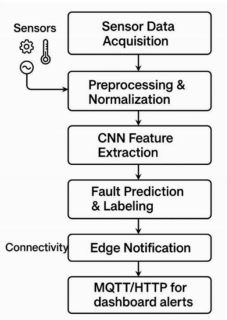
Figure 2. System workflow for Edge-AI-based fault detection and alerting in industrial motors
4. MATHEMATICAL MODELING
To formalize the operation of the proposed Edge-AI-based fault detection system, we define the mathematical constructs governing sensor fusion, feature extraction, fault classification, and decision-making.
1.Sensor Signal Representation
Let the multimodal input data at time t, be defined as:
2.Preprocessing and Normalization
Each signal modality is normalized using Z-score: Where and are the mean and standard deviation of the i -th signal.
3.CNN Feature Extraction
The normalized windowed signal is passed through convolutional layers. Let the CNN transformation be:Where, : number of time windows or patches and d: number of extracted features per window.
4.LSTM Temporal Learning
The output features are input to an LSTM network to capture temporal dependencies: Where, : hidden state andencodes the sequential representation of the fault signal
5.Fault classification
The hidden state is passed to a softmax classifier: : Convolutional operation capturing spatial patterns, Where, : vibration signal, : temperature signal and : current signal All sampled at uniform rate . The time-series window of samples is:
5. RESULT ANALYSIS
The system’s performance was evaluated using multiple key metrics: accuracy, defined as the ratio of correctly predicted outcomes to the total number of predictions; precision, which measures the proportion of true fault detections among all predicted positives; recall (or sensitivity), indicating the proportion of actual faults correctly identified by the model; and the F1 score, calculated as the harmonic mean of precision and recall to ensure balanced performance on imbalanced datasets. In addition, inference time, which is the average time taken per sample for classifying on edge devices, was tracked to ensure real-time deployment applicability. All the metrics were calculated across the three classes of faults (normal, minor, and major) to assess robustness and consistency.
The system consistently demonstrated high accuracy and low latency across all test cases shown in Table 2. The average inference time was ≤200ms, meeting the requirements for real-time edge processing. This table summarizes the performance of the CNN-LSTM fault detection system across four key motor conditions. The model achieved high accuracy and F1 scores (above 94%) for all fault types. Inference time remained under 200 ms, ensuring suitability for real-time edge deployment. Notably, the system showed the highest precision and recall for normal and stator overheat cases.
5.1 Graphical Representation of key Visualizations:
Here are the key visualizations generated to support the experimental evaluation, along with the
corresponding key points.
- Accuracy per Fault Type
- Precision, Recall, F1 Score Comparison
- Inference Time per Fault Type
- Confusion Matrix 5. ROC Curve
- Baseline Model Comparison:
Accuracy per Fault Type: Highlights the classification accuracy achieved for each test condition. The bar chart shows in Figure 3a the accuracy of the proposed CNN-LSTM model in detecting different motor fault conditions. It reveals that the model performs best in identifying the “No Fault” condition with an accuracy of approximately 98.2%, indicating a strong capability to recognize normal operation. The “Stator Overheat” class follows with about 97.3% accuracy, suggesting effective thermal fault detection. “Bearing Fault” is slightly lower at around 96.5%, likely due to signal similarities with other faults. The “Load Imbalance” fault exhibits the lowest accuracy at approximately 95.8%, which may result from overlapping signal patterns or minor class imbalance in the dataset.
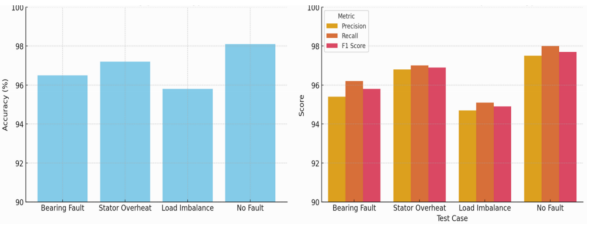
Figure 3. Performance metrics of the CNN-LSTM model across fault types, (a) Accuracy achieved per fault type and (b) Precision, Recall, and F1 Score Comparison per fault type.
Shows the efficiency of edge-based predictions in milliseconds.The bar graph shown in Figure 4a illustrates the average time (in milliseconds) taken by the CNN-LSTM model to infer each fault category on the edge device. The model achieves the lowest inference time for the “No Fault” condition at around 180 ms, indicating efficient recognition of normal motor behavior. “Stator Overheat” follows closely with approximately 185 ms, showing that thermal fault detection does not significantly impact latency. “Bearing Fault” inference takes slightly more time at about 190 ms, dueto complex vibration signature analysis. The highest inference time is observed for “Load Imbalance” at 200 ms, likely because current fluctuations are harder to classify and require deeper temporal analysis, slightly increasing model processing time. Overall, all classes are inferred under 210 ms, meeting realtime edge AI constraints.
Inference Time per Fault Type: Shows the efficiency of edge-based predictions in milliseconds.The bar graph shown in Figure 4a illustrates the average time (in milliseconds) taken by the CNN-LSTM model to infer each fault category on the edge device. The model achieves the lowest inference time for the “No Fault” condition at around 180 ms, indicating efficient recognition of normal motor behavior. “Stator Overheat” follows closely with approximately 185 ms, showing that thermal fault detection does not significantly impact latency. “Bearing Fault” inference takes slightly more time at about 190 ms, dueto complex vibration signature analysis. The highest inference time is observed for “Load Imbalance” at 200 ms, likely because current fluctuations are harder to classify and require deeper temporal analysis, slightly increasing model processing time. Overall, all classes are inferred under 210 ms, meeting realtime edge AI constraints.
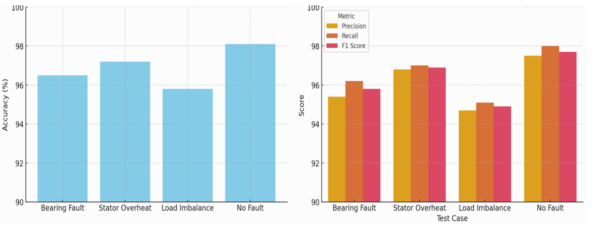
Figure 4. System performance efficiency and classification accuracy, (a) Inference time per fault type on edge device and (b) Confusion matrix showing Fault vs. Normal classification accuracy
CONCLUSION
This research proposes an efficient Edge-AI-based approach for real-time industrial motor fault detection using a hybrid CNN-LSTM architecture for multimodal sensor data such as vibration, temperature, and current signals. The proposed research study is shown to perform with high accuracy and low latency, indicating applicability for deployment in resource limited edge environments. Through enabling on-board inference, predictive analytics, and smart alerting mechanisms, the framework significantly reduces equipment downtime and maintenance costs. Further, the combination of real-time monitoring and machine learning based diagnostics results in prompt fault identification, even in dynamic operating conditions. The framework is compliant with the fundamental goals of Industry 4.0 by providing a scalable, autonomous, and energy-efficient solution for smart fault diagnosis. It enables industries to move from reactive to proactive maintenance practices, hence ensuring operational reliability and sustainability.
CONFLICT OF INTEREST
The authors declare no conflict of interest.
REFERENCES
[1] Leite, D.; Andrade, E. Rativa, D., & Maciel, A. M. A. Fault Detection and Diagnosis in Industry 4.0: A Review on Challenges and Opportunities. (2025). Sensors, 25(1), 60.
[2] Saeed, A., A.; Khan, M.; Akram, U. Deep learning-based approaches for intelligent industrial machinery health management and fault diagnosis in resource-constrained environments. Sci Rep15, 1114 (2025).
[3] Habyarimana, M.; Adebiyi, A. A. A Review of Artificial Intelligence Applications in Predicting Faults in Electrical Machines. Energies. (2025). 18(7), 1616.
[4] Altaf, S., Al-Anbuky, A., & Gheitasi, A, Enhancing Fault Detection in Distributed Motor Systems Using AI-Driven Cyber-Physical Sensor Networks. Engineering Proceedings, (2024), 82(1), 78.
[5] Akhyar Akhyar.; Mohd Asyraf Zulkifley.; Jaesung Lee.; Taekyung Song.; Jaeho Han.; Chanhee Cho.; Seunghyun Hyun.; Youngdoo Son.; Byung-Woo Hong.; Deep artificial intelligence applications for natural disaster management systems: A methodological review, Ecological Indicators. (2024), Volume 163,2024, 112067, ISSN 1470-160X,
[6] Chen L.; Xia C.; Zhao Z.; Fu H.; Chen. Y. AI-Driven Sensing Technology: Review, Sensors, (2024), 24(10), 2958.
[7] Del-Coco M.; Carcagnì P.; Oliver S. T.; Iskandaryan D.; Leo M. The Role of AI in Smart Mobility: A Comprehensive Survey. Electronics, (2025), 14(9), 1801.
[8] Ucar A.; Karakose M.; Kırımça, N. Artificial Intelligence for Predictive Maintenance Applications: Key Components, Trustworthiness, and Future Trends. Applied Sciences,
(2024), 14(2), 898.
[9] Alagha N.; Khairuddin A. S. M.; Haitaamar, Z. N.; Al-Khatib O.; Kanesan J. Artificial Intelligence in Wind Turbine Fault Detection and Diagnosis: Advances and Perspectives. Energies, (2025), 18(7), 1680.
[10] Daniel Fährmann; Laura MartínLuis Sánchez.Naser Damer.Anomaly Detection inSmart Environments: A Comprehensive Survey, (2024).
[11] Zixuan Zhang.; Luwei Wang.; Chengkuo Lee. Recent Advances in Artificial Intelligence Sensors, (2023).
[12] Aguayo-Tapia, Avalos-Almazan, Rangel-Magdaleno J. Entropy-Based Methods for Motor Fault Detection: A Review. Entropy, (2024), 26(4), 299.
[13] Ahmed, S.F.;Alam, M.S.B.; Hassan, M.; Deep learning modelling techniques: current progress, applications, advantages, and challenges. Artificial Intelligence Rev56, 13521– 13617 (2023).
[14] Uçar Ayşegül.; Karakose Mehmet.; Kırımça Necim. Artificial Intelligence for Predictive Maintenance Applications: Key Components, Trustworthiness, and Future Trends. Applied Sciences. (2024),14, 898.
[15] Moosavi S.; Farajzadeh-Zanjani M.; Razavi-Far.; Palade V.; Saif M. Explainable AI in Manufacturing and Industrial Cyber–Physical Systems: A Survey. Electronics, (2024), 13(17), 3497.
[16] Marium Jalal.; Ihsan Ullah Khalil.; Azhar ul Haq.; Deep learning approaches for visual faults diagnosis of photovoltaic systems: State-of-the-Art review, Results in Engineering, sciencedirect.com, (2024), Vol. 23,2024,102622.
[17] Gültekin Ö.; Cinar E.; Özkan K.; Yazıcı A. Real-Time Fault Detection and Condition Monitoring for Industrial Autonomous Transfer Vehicles Utilizing Edge Artificial Intelligence. Sensors, (2022), 22(9), 3208.
[18] Miller T.; Durlik I.; Kostecka E.; Borkowski P.; Łobodzińska A. A Critical AI View on Autonomous Vehicle Navigation: The Growing Danger. Electronics, (2024), 13(18), 3660.
[19] Jouini O.; Sethom K.; Namoun A.; Aljohani N.; Alanazi M. H.; Alanazi M. N. A Survey of Machine Learning in Edge Computing: Techniques, Frameworks, Applications, Issues, and Research Directions. Technologies, (2024), 12(6), 81.
[20] Visconti P.; Rausa G.; Del-Valle-Soto C.; Velázquez R.; Cafagna, D.; De Fazio, R. Machine Learning and IoT-Based Solutions in Industrial Applications for Smart Manufacturing: A Critical Review. Future Internet, (2024), 16(11), 394.
[21] Kodumuru R.; Sarkar S.; Parepally V.; Chandarana, J. Artificial Intelligence and Internet of Things Integration in Pharmaceutical Manufacturing:ASmart Synergy. Pharmaceutics, (2025), 17(3), 290.
[22] Hassani S.; Dackermann U. A Systematic Review of Advanced Sensor Technologies for Non-Destructive Testing and Structural Health Monitoring. Sensors, (2023), 23(4), 2204.
[23] Mohandas R.; Southern M.; O’Connell E.; Hayes, M. A Survey of Incremental DeepLearning for Defect Detection in Manufacturing. Big Data andCognitiveComputing, (2024), 8(1), 7.
[24] Janga B.; Asamani G. P.; Sun Z.;Cristea N. A Review of Practical AI for Remote Sensing in Earth Sciences. Remote Sensing (2023), 15(16), 4112.
[25] Melo A.; Câmara M. M.; Pinto, J. C. Data-Driven Process Monitoring and Fault Diagnosis: A Comprehensive Survey. Processes, (2024), 12(2), 251.
[26] Ferraz Júnior F.; Romero R. A. F.;Hsieh, S.-J. Machine Learning for the Detection and Diagnosis of Anomalies in Applications Driven by Electric Motors. Sensors, (2023), 23(24), 9725.
[27] Crespo-Aguado M.; Lozano R.; Hernandez-Gobertti, F.; Molner N.; Gomez-Barquero D. Flexible Hyper-Distributed IoT–Edge–Cloud Platform for Real-Time Digital Twin Applications on 6G-Intended Testbeds for Logistics and Industry. Future Internet, (2024), 16(11), 431.
[28] Mercorelli P. Recent Advances in Intelligent Algorithms for Fault Detection and Diagnosis. Sensors, (2024), 24(8), 2656.
[29] Zaman W.; Siddique M. F.; Ullah S.; Saleem F.;Kim, J.-M. Hybrid Deep Learning Model for Fault Diagnosis in Centrifugal Pumps: A Comparative Study of VGG16, ResNet50, and Wavelet Coherence Analysis. Machines, (2024), 12(12), 905.
[30] Hewang Nie.; Songfeng Lu. Securing IP in edge AI: neural network watermarking for multimodal models. Applied Intelligence (Nov 2024), 54, 21, 10455–10472.
[31] Strantzalis K.; Gioulekas F.; Katsaros P.; Symeonidis A. Operational State Recognition of a DC Motor Using Edge Artificial Intelligence. Sensors, (2022), 22(24), 9658.
[32] Ameer H. Sabry.; Ungku Anisa Bte Ungku Amirulddin. A review on fault detection and diagnosis of industrial robots and multi-axis machines, Results in Engineering, Volume 23, 2024,102397, ISSN 2590-1230.
[33] An Kang.; Lu Jingfeng.; Zhu Quanjing.; Wang Xiaoxian.; de Silva Clarence.; Xia Min. Edge Solution for Real-Time Motor Fault Diagnosis Based on Efficient Convolutional Neural Network. IEEE Transactions on Instrumentation and Measurement, (2023), PP. 11.
[34] De las Morenas, J., Moya-Fernández, F., & López-Gómez, J. A. (2023). The Edge Application of Machine Learning Techniques for Fault Diagnosis in Electrical Machines. Sensors, 23(5), 2649.
[35] Chunpeng Tian.; Zhaoyang Xu.; Lukun Wang.; Yunjie Liu. Arc fault detection using artificial intelligence: Challenges and benefits[J]. Mathematical Biosciences and Engineering, 2023, 20(7): 12404-12432.
[36] Fuhua Wang.;Zongdong Zhang.; Kai Wu.; Dongxiang Jian.; Qiang Chen.; Chao Zhang.; Yanling Dong.; Xiaotong He.; Lin Dong. Artificial intelligence techniques for ground fault line selection in power systems: State-of-the-art and research challenges. Mathematical Biosciences and Engineering, 2023, 20(8): 1451814549.
[37] Giuseppe Ciaburro. Machine fault detection methods based on machine learning algorithms: A review, Mathematical Biosciences and Engineering, 2022, 19(11): 1145311490.
[38] Yu Cao.;Yongyi Chen.; Dan Zhang.; Mohammed Abdullah.; ALTASN: A few-shot learning fault diagnosis method for rotating machinery of unmanned surface vehicles based on attention mechanism, 2024, 0142-3312.
[39] Xiaoxing Su. Engineering fault intelligent monitoring system based on Internet of Things and GIS, 2023, 12, 2192-8029.
[40] Chunpeng Tian.; Mengyao Song.;Beibei Niu.; Jingqing Li.; Pu Sun. Enhancing Arc Fault Detection in DC Series Circuits Using a Sample Entropy and High-Order Cumulants-Based System. (2023), 979-8-3503-2936-0, 365.
[41] Fuhua Wang.; Zongdong Zhang.; Kai Wu.; Dongxiang Jian.; Qiang Chen.; Chao Zhang.; Yanling Dong.; Xiaotong He.; Lin Dong. Artificial intelligence techniques for ground fault line selection in power systems: State-of-the-art and research challenges, 2023, 20, 15510018, 14518,
[42] Shangze Chen.; Kamal Chandra Paul.; Tiefu Zhao. Enhancing Arc Fault Detection Performance through Data Augmentation with Artificial Intelligence Technology: An Approach to Time Series Dataset Enlargement, 2024, 979-8-3503-7606-7, 1866.
[43] 43. Ruimin Chu.; Li Chik, Jeffrey Chan.; Kurt Gutzmann.; and Xiaodong Li. Automatic meter error detection with a data-driven approach. Engineering Applications in Artificial Intelligence. 2023, 123.
[44] 44. Shen J.; Morrison M.; Miao H.; Gu F. Harnessing Deep Learning for Fault Detection in Industry 4.0: A Multimodal Approach. In Proceedings – 2024 IEEE 6th International Conference on Cognitive Machine Intelligence, CogMI 2024 (pp. 288-294).
[45] Altaf, S.; Al-Anbuky, A.; Gheitasi, A. Enhancing Fault Detection in Distributed Motor Systems Using AI-Driven Cyber-Physical Sensor Networks, in Proceedings of the 11th International Electronic Conference on Sensors and Applications, 26–28 November 2024, MDPI: Basel, Switzerland.
[46] S. Deng; H. Zhao; W. Fang J. Yin; S. Dustdar; A. Y. Zomaya. Edge intelligence: The confluence of edge computing and artificial intelligence. IEEE Internet of Things Journal, 2020, vol. 7, no. 8, pp. 7457–7469.
[47] J. Yao.; S. Zhang.; Y. Yao. Edge-cloud polarization and collaboration: A comprehensive survey for ai. IEEE Transactions on Knowledge and Data Engineering, 2022.
[48] D. Zha.; Z. P. Bhat.; K.-H. Lai, F. Yang.; Z. Jiang.; S. Zhong.; X. Hu. Data-centric artificial intelligence: A survey
[49] L. Li, K. Ota, M. Dong. Deep learning for smart industry: Efficient manufacturing inspection system with fog computing. IEEE Transactions on Industrial Informatics, 2018, vol. 14, no. 10, pp. 4665–4673.
[50] A. H. Sodhro.; S. Pirbhulal.; V. H. C. De Albuquerque. Artificial intelligence-driven mechanism for edge computing-based industrial applications. IEEE Transactions on Industrial Informatics, 2019, vol. 15, no. 7, pp. 4235–4243.
[51] Khaled B. Letaief.; Yuanming Shi.; Jianmin Lu.; Jianhua Lu. Edge Artificial Intelligence for 6G: Vision, Enabling Technologies, and Applications. IEEE Journal on Sel. and Communication. 40, 1 (Jan. 2022), 5–36.
[52] Hao Chen.; Jia-ming Li.; Xian-Bo Wang.; Lian-Qing Yu.; Zhi-Xin Yang. Review of intelligent fault diagnosis for rotating machinery under imperfect data conditions, Expert Systems with Applications, 2025, Volume 285, 127726, ISSN 0957-4174.
[53] Chen, X.; Xie, H.; Tao, X. Artificial intelligence and multimodal data fusion for smart healthcare: topic modeling and bibliometrics. Artificial Intelligence Rev57, 91 (2024).
[54] Saeed A.; A. Khan M.; Akram U. Deep learning-based approaches for intelligent industrial machinery health management and fault diagnosis in resource-constrained environments. Sci Rep15, 1114 (2025).
[55] Rajput.; Dharmendra.; Meena.; Gaurav Acharya.; Malika Mohbey K. Fault prediction using fuzzy convolution neural network on IoT environment with heterogeneous sensing data fusion. Measurement: Sensors. (2023), 26.
[56] Samanazari Mehdi.; Flammini Francesco.; Santini Stefania.; Caporuscio Mauro. A Systematic Literature Review on Transfer Learning for Predictive Maintenance in Industry 4.0. IEEE Access. (2023), PP. 1-1.
[57] Castaño Fernando.; Cruz Hernández.; Yarens Villalonga.; Alberto Haber Guerra.; Rodolfo Elias. Data-Driven Insights on Time-to-Failure of Electromechanical Manufacturing Devices: A Procedure and Case Study. IEEE Transactions on Industrial Informatics. 2022, PP. 1-11.
[58] Yu Wenjin.; Liu Yuehua.; Dillon, Tharam.; Rahayu Wenny. Edge Computing-Assisted IoT Framework with an Autoencoder for Fault Detection in Manufacturing Predictive Maintenance. IEEE Transactions on Industrial Informatics. 2022, PP. 1-1.
[59] Asutkar Supriya.Chalke Chaitravi.; Shivgan Kajal.; Tallur Siddharth. TinyML-enabled edge implementation of a transfer learning framework for domain generalization in machine fault diagnosis. Expert Systems with Applications. (2022). 213. 119016.
[60] Ren Zhijun.;Lin, Tantao.; Feng Ke.; Zhu Yongsheng.; Liu, Zheng.; Yan Ke. A Systematic Review on Imbalanced Learning Methods in Intelligent Fault Diagnosis. IEEETransactions onInstrumentation andMeasurement.2023, PP.1-1.
[61] Meng Ziran.; Zhu Jun.; Cao Shancheng.; Li Pengfei.; Xu Chao. Bearing Fault Diagnosis Under Multisensor Fusion Based on Modal Analysis and Graph Attention Network. IEEE Transactions on Instrumentation andMeasurement. 2023, PP. 1-1.
[62] Zhang B.; Pang X.; Zhao P.; Lu K. A new method based on encoding data probability density and convolutional neural network for rotating machinery fault diagnosis. IEEE Access11, 26099–26113 (2023).
[63] Li Xianling.; Hu Hao.; Zhang Shichao.;Tang Gang. A Fault Diagnosis Method for Rotating Machinery with Semi-Supervised Graph Convolutional Network and Images Converted from Vibration Signals. IEEE Sensors Journal. 2023, PP. 1-1.
[64] Imamura L.; Y. Diagnosis of Unbalance in Lightweight Rotating Machines Using a Recurrent Neural Network Suitable for an Edge-Computing Framework. Journal of Control, Automation and Electrical Systems, vol. 33, no. 4, Jan. 2022, pp. 1272-1285.
[65] Teoh Yyi Kai .; Gill Sukhpal Singh.; Parlikad Ajith Kumar. IoT and Fog-Computing- Based Predictive Maintenance Model for Effective Asset Management in Industry 4.0 Using Machine Learning. IEEE Internet of Things Journal. 2021. Awais. Deep learning-based approaches for intelligent industrial machinery health management
[66] Saeed Ali.; Khattak Muazzam.; Akram Usman.; Obidallah Waeal.; Jawed Soyiba.; Ahmad, and fault diagnosis in resource-constrained environments. Scientific Reports. 2025. 15.
[67] Xiaojuan Zhu.; Tianhao Zhang.; Jinwei Zhang.; Bao Zhao.; Shunxiang Zhang.; Cai Wu. Deep reinforcement learning-based edge computing offloading algorithm for softwaredefined IoT, Computer Networks, Volume 235,2023, 110006, ISSN 1389-1286.
[68] Maurya Manisha.; Panigrahi Isham; Dash Dipti.; Malla Chandrabhanu. Intelligent faultdiagnostic system for rotating machinery based on IoT with cloud computing and artificial intelligence techniques: a review. 2023. Soft Computing. 28. 1-18.
[69] Lu Jinfeng.; An Kang.; Wang Xiaoxian.; He Qingbo. Edge Computing on IoT for Machine Signal Processing and Fault Diagnosis: A Review. IEEE Internet of Things Journal. 2023.
[70] Wang Qizhao.; Li Qing.; Wang Kai.; Wang Hong.; Zeng Peng. Efficient federated learning for fault diagnosis in industrial cloud-edge computing. Computing. (2021).103.
[71] Alenizi Farhan.; Abbasi Shirin.; Mohammed Adil.; Rahmani Amir. The artificial intelligence technologies in Industry 4.0: A taxonomy, approaches, and future directions. Computers & Industrial Engineering. (2023).
[72] Chong Chen.; Huibin Fu.; Yu Zheng.; Fei Tao.; Ying Liu.; The advance of digital twin for predictive maintenance: The role and function of machine learning, Journal of Manufacturing Systems, (2023), Vol. 71, 2023, Pages 581-594, ISSN 0278-6125,
[73] T R Mahesh.;Saravanan C.; Ram V.; Kumar V.; Vullikanti Vivek.; Guluwadi Suresh. DataDriven Intelligent Condition Adaptation of Feature Extraction for Bearing Fault Detection Using Deep Responsible Active Learning. IEEE Access. (2024). PP. 1-1.
[74] A Khan.; Ibrahim Haleem.; A Javaid Mohd. Role of Internet of Things (IoT) in Adoption of Industry 4.0,2022, Journal of Industrial Integration and Management (2024). P: 515-533.
[75] Su Weibin.; Xu Gang.; He Zhengfang.; Machica, Ivy Kim.; Quimno Val.; Du Yi.; Kong Yanchun. Cloud-Edge Computing-Based ICICOS Framework for Industrial Automation and Artificial Intelligence: A Survey, Journal of Circuits, Systems and Computers, 2023, vol :32,p:2350168.
[76] Abyarimana M.; Adebiyi A. A. A Review of Artificial Intelligence Applications in Predicting Faults in Electrical Machines. Energies, (2025), 18(7), 1616.
[77] Mohamed Almazrouei, S.; Dweiri F.; Aydin R. A review on the advancements and challenges of artificial intelligence-based models for predictive maintenance of water injection pumps in the oil and gas industry. SN Appl. Sci. 2023, 5, 391.
[78] Shreyas Gawde.; Shruti Patil.; Satish Kumar.; Pooja Kamat.; Ketan Kotecha.; Ajith Abraham.; Multi-fault diagnosis of Industrial Rotating Machines using Data-driven approach: A review of two decades of research, Engineering Applications of Artificial Intelligence, 2023, Vol. 123, Part A, 106139, ISSN 0952-1976.
[79] Mandal M. C.; Mondal N.; Ray A.; An expert system-based decision-making framework for benchmarking industry in sustainable manufacturing. Benchmarking:An International Journal, (2024), Vol. ahead-of-print No. ahead-of-print.
[80] Chen Gang.; Yuan Junlin.; Zhang Yiyue Zhu Hanyue.; Huang Ruyi.; Wang, Fengtao.; Li Weihua. Enhancing Reliability Through Interpretability: A Comprehensive Survey of Interpretable Intelligent Fault Diagnosis in Rotating Machinery. IEEE Access. (2024)., PP. 1-1.
[81] Khanam Rahima.; Hussain Muhammad.; Hill Richard.; Allen Paul. A Comprehensive Review of Convolutional Neural Networks for Defect Detection in Industrial Applications.IEEE Access. (2024), PP. 1-1


