
IJCNC 04
OPTIMAL COVERAGE PATH PLANNING IN A
WIRELESS SENSOR NETWORK FOR INTELLIGENT
TRANSPORTATION SYSTEM
Saureng Kumar and S C Sharma
Electronics and Computer Discipline, IIT Roorkee, Saharanpur Campus, Saharanpur
ABSTRACT
With the enhancement of the intelligent and communication technology, an intelligent transportation plays a vital role to facilitate an essential service to many people, allowing them to travel quickly and conveniently from place to place. Wireless sensor networks (WSNs) are well-known for their ability to detect physical significant barriers due to their diverse movement, self-organizing capabilities, and the integration of this mobile node on the intelligent transportation system to gather data in WSN contexts is becoming more and more popular as these vehicles proliferate. Although these mobile devices might enhance network performance, however it is difficult to design a suitable transportation path with the limited energy resources with network connectivity. To solve this problem, we have proposed a novel itinerary planning schema data gatherer (IPS-DG) model. Furthermore, we use the path planning module (PPM) which finds the transportation path to travel the shortest distance. We have compared our results under different aspect such as life span, energy consumption, and path length with Low Energy Adaptive Clustering Hierarchy (LEACH), Multi-Hop Weighted Revenue (MWR), Single-Hop Data Gathering Procedure (SHDGP). Our model outperforms in terms of energy usage, shortest path, and longest life span of with LEACH, MWR, SHDGP routing protocols.
KEYWORDS
Wireless Sensor Network, Intelligent Transportation System, Path Planning, Routing protocol.
1. INTRODUCTION
In the past year, interest in wireless sensor networks (WSNs) has grown significantly increases in the development of an intelligent transportation systems (ITS)[1]. WSNs allow for the collection of data from vehicles, roadways, and other infrastructure to improve safety, efficiency, and reliability. It consists of a huge number of tiny sensor nodes having computation, networking, and sensing capabilities that work together to deliver monitoring and sensing services[2]. Due to their communication capabilities, the wireless sensor networks [3]are ubiquitous in our daily lives, monitoring systems such as road traffic management[4], security and surveillance[5], and intrusion detection systems [6] and their inherent advantages of easy deployment in various applications. Despite these advantages, WSNs have difficulties in vehicle alert authentication[7], and the replacement of in-built power units for sensor nodes is done manually, which is a complex process in harsh environments. Thus, researchers have focused on energy management systems[8] by deploying optimal routing processes to enhance network lifespan.[9] Considering the shift from static to moving nodes in WSNs, various techniques have been proposed for path planning. These techniques, including heuristic algorithms[10], evolutionary algorithms[11], and swarm intelligence-based algorithms[12]aim to find efficient and reliable routes while considering energy efficiency, network connectivity, and application requirements.[13] These algorithms are computationally efficient and can handle large-scale networks. However, they may not always find the optimal solution and can be sensitive to the initial conditions. Our proposed IPS-DG model utilizes a single-hop connection to achieve energy-efficient optimal coverage with the moving mobile node (MN), allowing it to gather various information about nodes simultaneously.
The contribution made for this research work are as follows:
1. Proposed a novel IPS-DG model for intelligent transportation system for optimal
coverage path planning
2. Developed an algorithm for the path planning module.
3. Discussed the parameter like energy consumption, path route and life span for sensor
based intelligent transportation system and simulation were obtained through MATLAB
R2020b.
4. Perform the comparative analysis of different routing protocol.
The remaining sections of this paper detail are summarized as Section 1. Present the introduction, Section 2 represent grouping strategy, clustering and proposed assignation-based data gatherer, In the section 3, We proposed a novel IPS-DG model for path planning, energy consumption model, coverage ability & optimization, path planning module algorithm. In the next section, we briefly discuss the outcome of this research. and comparative analysis of energy consumption, lifespan, and path route with our proposed model and conclude the paper.
2. GROUPING STRATEGY BASED NETWORK MODEL
Grouping strategy-based network models are a popular approach in wireless sensor networks (WSNs). These models aim to improve the network’s efficiency by dividing the sensors into groups based on certain criteria, such as their location or function. By doing so, the sensors in each group can share information and communicate more effectively, which lowers the network’s overall communication overhead and energy usage. Additionally, grouping tactics can aid in balancing the energy usage across sensors, extending the life of the network. However, designing an effective grouping strategy is a challenging task and requires careful consideration of various factors, such as the network topology, the application requirements, and the available resources a lot of scope to the researcher to focus this area. At present the grouping tactics has been implementing in the intelligent transportation in order to gather the real time traffic data. Most of the researcher fixed the group of sensor node in the both side of the zebra. This sensor node sense the data and transmit to the base station. This strategy also integrates different routing protocols such as Low-Energy Adaptive Clustering Hierarchy (LEACH)[14], Multi-Hop Weighted Revenue (MWR) [15], and Single-Hop Data-Gathering Procedure (SHDGP) [16]. The performance index is created by defining variables like energy usage and coverage area. The utility value of each node is then used to construct a chained routing scheme [17] In the chained routing scheme the significant benefits in terms of message delivery speed, collision likelihood, and precision was claimed, however an energy efficiency routing protocol (EERP)[18] has been proposed to improves the network lifetime by forwarding data packets via the optimal shortest path. In order to balance between energy and communication expenditure in each routing approach. The author [19] proposed a survey to insight the future direction, through this motivation we have perform the our research work in the direction of optimal coverage path planning in WSNs.
Problem Statement
It is essential to select the right cluster size when utilizing cluster-based approaches, as the performance is dependent on the average cluster size. A larger cluster for communication will put more strain on the workload of the cluster head, while a smaller cluster will result in a worse performance.
It is difficult to balance the need to efficient energy with the risk of packet loss and retransmissions. This could occasionally result in higher energy usage. As a result, it is challenging to strike a balance between transmission power and the quantity of lost or retransmitted packets.
To develop an algorithm that can identify the most efficient path for a mobile sensor node that minimize the total travel time and energy consumption
This research work proposes a new routing protocol IPS-DG model to tackle the problems associated with existing multi-hop routing technologies, which are caused by the complexity of current methods.
2.1. Clustering of Fixed Sink Node
A clustering strategy with a fixed sink system is used to extend network life and lower the energy consumption. This scheme uses three-layer schema ie; sensor node, access point and a fixed sink.
1. Sensor nodes are grouped into clusters, with each cluster being given a fixed sink as a
cluster head or leader.
2. An access point creates a wirless local area network and allow devices to connect the
network.
3. In order to measure the blind spot, sensor node must be divided into multiple sensor node
4. The fixed sink collect data according to their path route.
5. This will also enable better coverage and redundancy, making the network more robust
and reliable.

Figure 1. Clustering of node with fixed sink
In Figure 1, nodes are clustered around a fixed sink according to a predetermined protocol. After the nodes have been grouped, a supervisor node is chosen as the data gathering point. The network is randomly spread out over an area.
2.2. Clustering of Moving Sink Node
A clustering with the moving sink is another technique employed in wireless sensor networks. In this technique sensor node is grouped into a clustering format have a group leader or group head. This group head gathers and process the data. In this technique the mobile sink moves freely to any other location and can transmit the data to BS. In a typical wireless sensor network (WSN), nodes located further away from the BS tend to use less energy due to slower data speeds and infrequent communication with the BS. However, clustering methods such as HEED (Hybrid Energy-Efficient Distributed Clustering) [20], LEACH(Low-Energy Adaptive Clustering Hierarchy) [21] and TEEN (Threshold Sensitive Energy Efficient Sensor Network Protocol [22].have been developed to achieve energy-efficient clustering by selecting cluster leaders based on various metrics such as remaining energy, distance from the BS, or network connectivity. After being chosen, cluster heads can execute data aggregation and forwarding to the BS while non-cluster head nodes can turn down their radios to conserve energy.
Aside from clustering algorithms, other techniques such as data compression, sleep scheduling, and duty cycling can also be used to enhance the energy efficiency of WSNs. By combining these methods with energy-efficient clustering, it is possible to create WSNs that can operate for extended periods without requiring battery replacement or recharge.
2.3. Assignation based on Data Gathering.
An assignment-based data gatherer is a node or device that gathers and aggregates data from other networked sensor nodes. The data gatherer typically has more processing power and memory than the sensor nodes and may be connected to a central server or base station for further analysis and storage of the collected data. The data gatherer plays a crucial role in wireless sensor networks by collecting and organizing data from multiple sensor nodes, enabling efficient data processing and analysis.
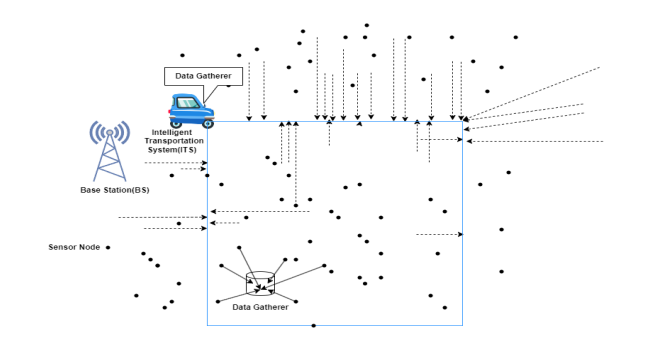
Figure 2. Assignation based schema with data gatherer
Figure 2 illustrates the framework of the proposed approach, which involves a sensor node that collects local information through its sensors. These nodes are anticipated to move along a predetermined transmission path [23] or a defined transmission point. Unlike traditional schemes that require the collector to visit every sensor node to collect data and stores it in its memory and moves to a new location, where it can collect data from additional sensor nodes. The mobile collector continues to move around the network in a pre-defined path until it reaches a base station, where it uploads the collected data. This scheme involves the use of a sensor node, which is typically a vehicle equipped with wireless communication capabilities. The vehicle passes through the several group of nodes to transmit the data to the leader node, facilitating the data gathering process.
3. PROPOSED MODEL: ITINERARY PLANNING SCHEMA-DATA GATHERER (IPS-DG)
Itinerary planning schema data gatherer (IPS-DG) is the detailed path travel plan or a route plan along with a data gatherer facility. The proposed model is designed to choose the vehicle’s customized path or route. It helps to create a systematic outline of the entire journey. Most vehicles use the online route tracking system for the journey and need an effective plan for optimal coverage. To overcome these disadvantages, we proposed a new implementation IPS-DG model with the data gatherer facility in the predefined path.
The following assumptions were considered for our proposed IPS-DG model.
1. All sensors should be immobile. Based on the minimum hop routing protocol, these
sensors should cover the communication range within a pre-set distance.
2. Monitor nodes (MNs) should be located within the predefined range
3. A stationary node should be set up within the sensor deployment area, and the data
collector must approach only for uploading the obtained data using a modified device
This schema is used to identify the best route with the intelligent transportation. There are various approaches to itinerary planning models, ranging from rule-based systems to machine learning algorithms. Some models rely on user inputs such as preferred destinations and travel dates, while others use external data sources such as weather forecasts and traffic patterns to optimize the itinerary.
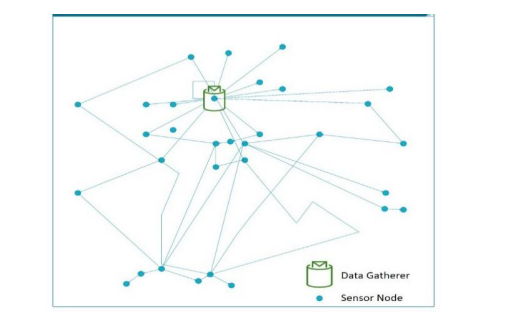
Figure 3. Itinerary planning model with data gatherer
Figure 3. illustrate the itinerary planning model with data gatherer system that allows for the collection and analysis of data across a network. The data gatherer is used to collect and store data from numerous networked sources, including sensors, programs, and databases. Figure 4 shows the flowchart for illustrating the path using a system database and current location method, where the current location of an intelligent transportation system is given to compute the arrival and departure time of each location. For this, Firstly, we determine the optimal path between each pair of sensor nodes through the data gatherer, then we enumerate all possible sequences and eliminate the impossible ones. Secondly, we optimize the possible itinerary based on the minimum waiting time.
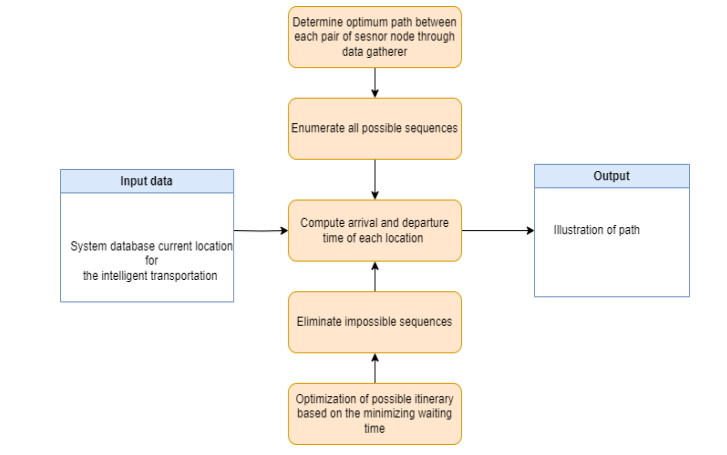
Figure 3. Flowchart of proposed model for itinerary planning schema data gatherer
In this study we have considered the following components for optimal coverage for path planning.
1. Compute arrival and departure time: The goal is to reduce waiting time by considering the duration of each activity, the time needed to travel between activities, and the operating hours of the activity locations. The code can be used to plan and optimize the order of activities in a practical scenario, which could be beneficial in various applications, such as scheduling tasks or organizing events to minimize waiting times and improve overall efficiency.
2. Optimize possible sequences: The method involves iterating through all possible sequences such as the duration of each activity, the travel time between activities, and the operating hours of the activity locations and calculating effectiveness in optimizing possible sequences.
The pseudo-code representation of arrival and departure time computation and Optimization of possible sequences are illustrated as follows.

3.1. Sensor Node Energy Consumption Model In WSNs, node energy consumption is a critical issue. Since energy is distributed for several 3.2. Formation of Coverage Ability for the Sensor Node This section commences by incorporating the travel path planning of the data gatherer into the coverage of mobile nodes (MNs). The nearby sensors exchange information exclusively with one another, as permitted by the communication range of their neighbouring nodes. Nevertheless, the data gatherer (DG) outperforms typical sensors within their respective transmission ranges. We assume that the data gatherer refrains from collecting network information because the movement of many nodes results in a significant packet loss rate and requires substantial energy for retransmission. Figure 5. The coverage area of the monitor node
In the diagram shown in Figure 5, MN1, MN2, and MN3 represent three distinct areas covered by mobile nodes (MNs). We defined the cover area by at least one common point. Here areas 1, 2, and 3 are covered by two MNs each, while Area 4 is covered by three common points (CPs) simultaneously. However, overlapping coverage regions can deplete the resources of the data gatherer and increase its travel distance. Therefore, reducing the degree of overlap in coverage regions will improve the efficiency of the data gatherer. However, computing the overlapping covered regions can be challenging, especially when a large number of MNs cover circular areas of sensor nodes. To facilitate the computation of the overlapping coverage rate, we use prop points, which are fictitious points distributed uniformly across the sensor field at a fixed distance from each other. Each prop point can determine its distance from an MN to determine whether it is included in its coverage. Using Formula (6) and (7), We determine both the communication scope rate and the corresponding coverage rate. 𝐾𝑐𝑜𝑣𝑒𝑟 = 𝐿𝑐𝑜𝑣𝑒𝑟/L (6) L is the total number of commenting points according to the IPS-DG framework, where 𝐿𝑐𝑜𝑣𝑒𝑟 denotes the number of prop points for one MN node however 𝐿𝑜𝑣𝑒𝑟𝑙𝑎𝑝_𝑐𝑜𝑣𝑒𝑟 denotes the overlap MN nodes. The Sensor nodes are regarded as prop points in this context. The IPS-DG is formalised after choosing all MNs, and sensors that are closer to the DG in terms of information are referred to as nearby MNs. With a limited number of MNs, we want to cover as many sensors as we can while reducing the amount of overlapped coverage. We use Formula (8) and mixedinteger programming to convert the IPS-DG objective (9).
Where n gives the quantity of sensors nodes, 𝐶𝑖and 𝑂𝑖 are defined as below, 𝐶𝑖 = { 1 If sensor i is covered by at least one MN (10) 𝑂𝑖 = { 1 If sensor i is covered by more than one MN (11) 3.3. Coverage Optimization using IPS-DG Our proposal involves an itinerary planning scheme to determine the optimal locations for MNs that satisfy the network route duration and MN count restrictions. This involves identifying the best location for each MN, which can be achieved through iterative methods. However, finding the optimal solution is a challenging task due to the NP-hard nature of scheduling of DG tours[25]. Since tour scheduling for the mobile collector has been identified as an NP-hard problem, determining the optimal solution can be challenging. virtual particles are utilized to represent the location of MNs, with each particle representing a complete solution for selecting MNs. Since the dimension of particles is fixed, it is necessary to first determine the number of MNs. This can be accomplished by, 𝑀𝑁𝑛 = 𝑆/𝜋𝑟2 (12) The variable S represents the complete sensing region, and r denotes the information distance of the sensor. To create the particles, we adopt a matrix representation with dimensions (n x 2.spn), as depicted below. Here, n denotes the number of nodes.
The variable 𝑉𝑖 𝑘 represents the speed of the k-th particle in the i-th dimension. Equation (13) ensures that nodes do not move too rapidly, while Formula (14) restricts particles to remain within the sensor field. We define the fitness function for IPS-DG, which includes the positive numbers 𝐿𝑐𝑜𝑣𝑒𝑟 and 𝐿𝑜𝑣𝑒𝑟𝑙𝑎𝑝_𝑐𝑜𝑣𝑒𝑟.The fitness function is adopted as follows: 𝐹𝑖𝑡𝑛𝑒𝑠𝑠 = 𝐿𝑜𝑣𝑒𝑟𝑙𝑎𝑝_𝑐𝑜𝑣𝑒𝑟/𝐿𝑐𝑜𝑣𝑒r (15) The execution was utilized by Algorithm1. Algorithm1. IPS-DG execution steps: Step 1: The random integers initialize the virtual node and its velocity v. Step 2: Each node compared its new fitness function, as defined by equation (15), to its previous 𝑉(𝑡 + 1) = 𝜆𝑣(𝑡) + 𝛼. 𝑟𝑎𝑛𝑑𝑜𝑚(𝑀𝑏𝑒𝑠𝑡 − 𝑝(𝑡) + 𝛽. 𝑟𝑎𝑛𝑑𝑜𝑚(). (𝑁𝑏𝑒𝑠𝑡 − 𝑝(𝑡)) (16) 𝑝(𝑡 + 1) = 𝑝(𝑡) + 𝑣(𝑡 + 1) (17) The symbol 𝜆 represents the inertia coefficient, The two-weight coefficient parameters α and β can be used to balance between inertial and cognitive forces. The function rand() generates a random number from the range (0,1) and the parameters α and β must satisfy the condition α+β=1.Random numbers were generated based on these coefficients. Step 3: To update the velocity and position of the particle, we utilize Formulas (16) and (17). In conclusion, the optimal MN selection method is represented by 𝑁𝑏𝑒𝑠𝑡. As depicted in Figure 5, some of the sensors are covered by the MN, while only a few sensor nodes are covered by multiple MNs. In such cases, these sensors can only rely on multi-hop transmission for data delivery. When a sensor detects an uncovered MN node, it calculates the estimated additional area that would be covered with its transmission. Although multi-hop communication is still present in the network, the range extension consumes more energy for data transmission. Figure 6. Monitor node selection using IPS-DG
3.4. Path Planning Module (PPM) Path planning module is a critical component of any intelligent transportation system, which navigate through an environment by generating an optimal path from a starting point to a destination while avoiding obstacles. The proposed approach aims to optimize the placement of Monitor Nodes (MNs) in a deployed network and plan a route for them using a meta-heuristic technique called Path Planning Module (RPM) as shown in Figure 6. In PPM, a Path Agent (PA) is initially deployed to cover all nodes in the network and form a matrix structure. We consider the WSN as an undirected graph, denoted as G ≤ U. Where U represents the set of MNs and L indicates the link that connects the nearest MN virtually. The matrix R is of size m x 𝑀𝑁𝑛, where m is the number of times PA covers all nodes and 𝑀𝑁𝑛is the number of MNs, to record the travel path of PA between the MNs in the network. The matrix S of size 𝑀𝑁𝑛x 𝑀𝑁𝑛 represents the number of virtual links established between the MNs. The route planning algorithm follows the steps outlined below. Algorithm 2: Path planning process step Step 1: Initially, the PA is deployed to travel across the network, covering all the deployed nodes for the initialization of Matrix R. The unvisited nodes are calculated using Equation (18), and the visited nodes are recorded in Matrix R. The assignation path from 𝑀𝑁𝑖 𝑡𝑜 𝑀𝑁𝑗 for the k-th PA in the t-th iteration is denoted by 𝑃𝑖𝑗(𝑡) 𝑘 It is calculated using the following equation:
Here, 𝜙𝑖𝑗 represents the link usage between 𝑀𝑁𝑖 𝑡𝑜 𝑀𝑁𝑗 , and 𝜕𝑖𝑗 (𝑡) represents the distance between 𝑀𝑁𝑖 𝑡𝑜 𝑀𝑁𝑗 in a reciprocal manner. 𝛼, 𝛽 are factors used for the link usage and inspiration factor. The unvisited nodes by PA are given by the factor “next”. Step 2: Calculate the distance travelled by the PA between the MNs using the equation (19). To minimize the traveling distance, we can utilize the product of 𝑥𝑖𝑗 ∗ 𝑦𝑖𝑗. 𝐿(𝑏𝑘) = ∑𝑖,𝑗𝜖𝑀𝑁𝑠𝑖≠𝑗 𝑥𝑖𝑗 ∗ 𝑦𝑖𝑗 (19) In the above equation, 𝑥𝑖𝑗shows the distance between 𝑀𝑁𝑖 𝑡𝑜𝑀𝑁𝑗 Where as 𝑦𝑖𝑗 is illustrated in the given equation (20). 𝑦𝑖𝑗 = { 1, 𝑖𝑓 𝑙𝑖𝑛𝑘 𝑏𝑒𝑡𝑤𝑒𝑒𝑛 𝑀𝑁𝑖 𝑡𝑜 𝑀𝑁𝑗 𝑖𝑠 𝑡𝑟𝑎𝑣𝑒𝑙𝑙𝑒𝑑 𝑏𝑦 𝑘 − 𝑡 ℎ𝑎𝑔𝑒𝑛𝑡 Step 3: The number of links between MN’s is counted using equation (21). The maximum number of iterations required to visit all nodes is determined by executing steps 1-4.
The symbol 𝜂 represents the rate at which the link count is reduced due to volatility, while q denotes the total number of links covered by one agent in a single trip. Figure 6. Routing strategy using PPM
4. RESULT AND COMPARISON The simulation setup is constructed to simulate a Wireless Sensor Network (WSN) application scenario, wherein 100 sensors randomly placed to continuously collect the local information through its sensor node. A flat space simulation environment consisting of ten 100m x 100m areas, with nodes randomly distributed and a transmission range of 100 meters, lasting for 12000 seconds and other parameters are described in Table 1.
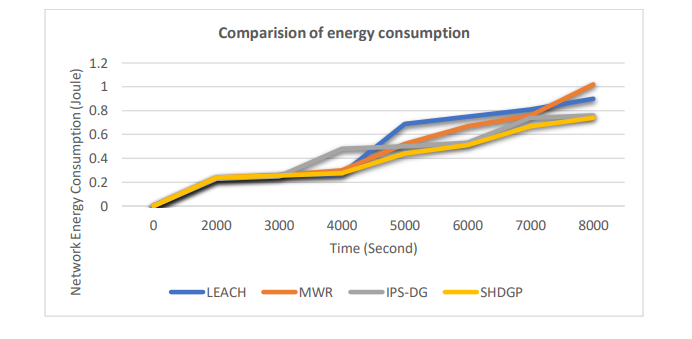
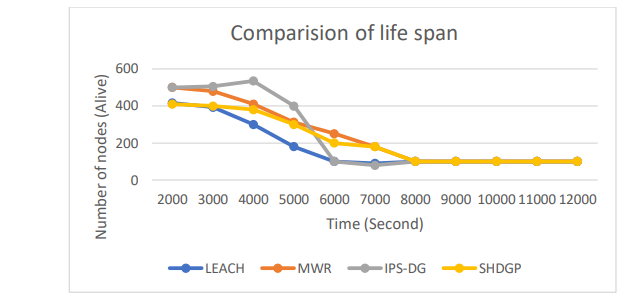
The key benefits of energy usage, path length and lifespan in wireless sensor networks are lower power consumption, higher communication range, and enhanced network dependability, network reliability, since it directly affects the nodes’ batteries, energy use is crucial for the network’s reliability. The number of hops a message must make to get to its destination is determined by the path length, which is crucial for effective communication between nodes. Lastly, lifespan is important for ensuring that the network remains operational over a long period of time. However, the sensors depend on batteries or recharged frequently because they cannot be used for extended periods of time. Additionally, the limited range of the sensors can limit the network’s coverage area and make it difficult to monitor larger areas. Additionally, the signal strength of the sensors can deteriorate with time due to environmental variables including interference from other wireless devices or physical impediments, which can result in shorter life spans. 4.1. Energy Consumption Several algorithms were utilized to compare the network’s energy consumption based on energy usage, as shown in Figures 7. Among the algorithms examined, SHDGP performed better, but it still requires improvements in energy consumption over IPS-DG. SHDGP’s energy usage increased after 8000 seconds, implying that IPS-DG might consume less energy than SHDGP. LEACH uses the most energy possible because of its multi-hop routing design, which requires multiple clusters to transport sensed data packets to a fixed sink over a long distance. In contrast, MWR, IPS-DG, and SHDGP use mobile collectors to gather data, resulting in varying levels of energy savings. MWR forwards data packets using similar pairs, whereas LEACH requires significantly more transmission between the data collector and compatible pairings. IPS-DG and SHDGP are single-hop-based networks that conserve energy by transmitting at a lower power level, unlike LEACH, which uses fixed data collectors. Figure 7 Comparison of energy consumption with different routing protocols 4.2. Life Span The lifespan of a wireless sensor network is the duration between its nodes’ activation and deactivation. The addition of a spare node can prolong the network lifespan. Several algorithms have been proposed to enhance the network lifespan, as demonstrated in Figure 8. LEACH has the shortest network lifespan, with its initial node deactivating after approximately 2800 seconds. In contrast, the other three algorithms surpass LEACH’s performance. When the source node and data gatherer are far apart, the transmission radius decreases. LEACH’s low-energy scheme and long-distance transmission result in uneven energy consumption, causing the sensors to fail prematurely. However, since MWR, IPS-DG, and SHDGP employ mobile data collectors, they have a longer network lifespan than LEACH. The compatibility pairs acting as forwarders in MWR is one of the reasons for its limited lifespan. Although IPS-DG and SHDGP use single-hop communication, IPS-DG increases its network lifespan by optimizing mobile collector efficiency. Figure 7 Comparison of energy consumption with different routing protocols 4.3. Path Route A path route in any network is a way to travel from a source to a destination, and the shortest path method is used to achieve the desired outcome. The path length is measured by the time it takes to travel from the initial node to the final destination node. Numerous algorithms were utilized to compare the length of the intended route, as illustrated in Figure 9. LEACH collects data using a stationary sink with a zero-length, resulting in the longest route for each round. SHDGP, which constructs a tree structure to move from one node to another, produces the longest path route. Meanwhile, the path route length remains constant in IPS-DG, even though the coverage rate remains unchanged when the network model and transmission range are established. Figure 9 Comparison of path route with different routing protocols Figure 10 Performance comparison with different routing protocols Figure 10. Shows the performance comparison different routing protocols such as LEACH, MWR, SHDGP and IPS-DG. Based on the least amount of energy used, the shortest path, and the longest life span, a rating has been determined. Our proposed model outer performs among the different routing protocols. 5. CONCLUSION. This research work presents a novel itinerary planning schema data gatherer (IPS-DG) model for wireless sensor networks (WSNs) integrated with mobile devices. The proposed model is aimed to find an optimal transportation path with minimum distance coverage over a comprehensive sensor node. The path planning module (PPM) is used to organize the transportation path considering energy usage, path length, and lifespan with multiple protocols. For this, the simulations were conducted under various conditions to demonstrate that the proposed protocol has considerable benefits in terms of energy usage, path length, and lifespan. MATLABR2020b software was used to implement the proposed technique. These results show that the suggested protocol has significant advantages in energy usage, path length, and lifespan. The comparative results show that IPS-DG outperforms Low Energy Adaptive Clustering Hierarchy (LEACH), Multi-Hop Weighted Revenue (MWR), and Single-Hop Data gathering Procedure (SHDGP) in terms of lifespan, energy consumption, and path length. The proposed model could be beneficial in improving the network performance of WSNs integrated with mobile devices. CONFLICT OF INTEREST The author has declared no competing interests for publication. REFERENCES [1] S. Kumar, S. C. Sharma, and R. Kumar, “Wireless Sensor Network Based Real-Time Pedestrian Detection and Classification for Intelligent Transportation System,” Int. j. math. eng. manag. sci., vol. 8, no. 2, pp. 194–212, Apr. 2023, doi: 10.33889/IJMEMS.2023.8.2.012. [2] A. Keerthika and V. B. Hency, “A SURVEY OF ROUTING PROTOCOLS OF WIRELESS SENSOR NETWORK WITH MOBILE SINKS,” ARPN Journal of engineering and applied sciences, vol. 11, no. 11, p. 14, 2016. [3] W. Rehan, S. Fischer, and M. Rehan, “A Critical Review of Surveys Emphasizing on Routing in Wireless Sensor Networks—An Anatomization under General Survey Design Framework,” Sensors, vol. 17, no. 8, p. 1713, Jul. 2017, doi: 10.3390/s17081713. [4] D. Zhu, H. Du, Y. Sun, and N. Cao, “Research on Path Planning Model Based on Short-Term Traffic Flow Prediction in Intelligent Transportation System,” Sensors, vol. 18, no. 12, p. 4275, Dec. 2018, doi: 10.3390/s18124275. [5] S. Chavhan, D. Gupta, S. Garg, A. Khanna, B. J. Choi, and M. S. Hossain, “Privacy and Security Management in Intelligent Transportation System,” IEEE Access, vol. 8, pp. 148677–148688, 2020, doi: 10.1109/ACCESS.2020.3015096. [6] M. Khanafer, M. Guennoun, and H. T. Mouftah, “Intrusion Detection System for WSN-Based Intelligent Transportation Systems,” in 2010 IEEE Global Telecommunications Conference GLOBECOM 2010, Miami, FL, USA: IEEE, Dec. 2010, pp. 1–6. doi: 10.1109/GLOCOM.2010.5683730. [7] K. N. Tripathi, A. M. Yadav, and S. C. Sharma, “TREE: Trust-Based Authenticated and Secure Dissemination of Emergency Event Information for the Network of Connected Vehicles,” Arab J Sci Eng, Mar. 2022, doi: 10.1007/s13369-022-06753-1. [8] S. Javadi and M. Marzban, “Investigating on Different Methods of Energy Management System in Hybrid Electric Vehicles and Presenting Proposed Solutions for its Optimization,” vol. 1, 2016. [9] J. A. Fadhil and Q. I. Sarhan, “Internet of Vehicles (IoV): A Survey of Challenges and Solutions,” in 2020 21st International Arab Conference on Information Technology (ACIT), Giza, Egypt: IEEE, Nov. 2020, pp. 1–10. doi: 10.1109/ACIT50332.2020.9300095. [10] A. H. Halim and I. Ismail, “Combinatorial Optimization: Comparison of Heuristic Algorithms in Travelling Salesman Problem,” Arch Computat Methods Eng, vol. 26, no. 2, pp. 367–380, Apr. 2019, doi: 10.1007/s11831-017-9247-y. [11] Y.-F. Liao, D.-H. Yau, and C.-L. Chen, “Evolutionary algorithm to traveling salesman problems,” Computers & Mathematics with Applications, vol. 64, no. 5, pp. 788–797, Sep. 2012, doi: 10.1016/j.camwa.2011.12.018. [12] D. Tian, J. Hu, Z. Sheng, Y. Wang, J. Ma, and J. Wang, “Swarm intelligence algorithm inspired by route choice behavior,” J Bionic Eng, vol. 13, no. 4, pp. 669–678, Dec. 2016, doi: 10.1016/S1672- 6529(16)60338-4. [13] B. Lu and C. Zhou, “Particle Swarm Algorithm and Its Application in Tourism Route Design and Optimization,” Computational Intelligence and Neuroscience, vol. 2022, pp. 1–11, Mar. 2022, doi: 10.1155/2022/6467086. [14] N. Kumar, J. R. Desai, and D. Annapurna, “ACHs-LEACH: Efficient and Enhanced LEACH protocol for Wireless Sensor Networks,” in 2020 IEEE International Conference on Electronics, Computing and Communication Technologies (CONECCT), Bangalore, India: IEEE, Jul. 2020, pp. 1–6. doi: 10.1109/CONECCT50063.2020.9198666. [15] D. D. Vergados, D. J. Vergados, A. Sgora, D. Vouyioukas, and I. Anagnostopoulos, “Enhancing Fairness in Wireless Multi-Hop Networks,” in Proceedings of the 3rd International ICST Conference on Mobile Multimedia Communications, Nafpaktos, Greece: ICST, 2007. doi: 10.4108/ICST.MOBIMEDIA2007.1855. [16] T. Zaheer, A. W. Malik, A. U. Rahman, A. Zahir, and M. M. Fraz, “A vehicular network–based intelligent transport system for smart cities,” International Journal of Distributed Sensor Networks, vol. 15, no. 11, p. 155014771988884, Nov. 2019, doi: 10.1177/1550147719888845. [17] Y. Wang and F. Li, “The study of chained routing algorithm for WNS based on group perception,” Int. J. Mod. Phys. C, vol. 31, no. 04, p. 2050049, Apr. 2020, doi: 10.1142/S0129183120500497. [18] A. Ghaffari, “An Energy Efficient Routing Protocol for Wireless Sensor Networks using A-star Algorithm,” Journal of Applied Research and Technology, vol. 12, no. 4, pp. 815–822, Aug. 2014, doi: 10.1016/S1665-6423(14)70097-5. [19] J. N. Al-Karaki and A. E. Kamal, “Routing techniques in wireless sensor networks: a survey,” IEEE Wireless Commun., vol. 11, no. 6, pp. 6–28, Dec. 2004, doi: 10.1109/MWC.2004.1368893. [20] Y. Zhou, X. Wang, T. Wang, B. Liu, and W. Sun, “Fault-tolerant multi-path routing protocol for WSN based on HEED,” IJSNET, vol. 20, no. 1, p. 37, 2016, doi: 10.1504/IJSNET.2016.074280. [21] T. Samant, P. Mukherjee, A. Mukherjee, T. Swain, and A. Datta, “LEACH–V: A Solution for IntraCluster Cooperative Communication in Wireless Sensor Network,” Indian Journal of Science and Technology, vol. 9, no. 48, Dec. 2016, doi: 10.17485/ijst/2016/v9i48/100619. [22] Y. Ge, S. Wang, and J. Ma, “Optimization on TEEN routing protocol in cognitive wireless sensor network,” J Wireless Com Network, vol. 2018, no. 1, p. 27, Dec. 2018, doi: 10.1186/s13638-018- 1039-z. [23] M. Ghaleb, S. Subramaniam, M. Othman, and Z. Zukarnain, “Predetermined path of mobile data gathering in wireless sensor networks based on network layout,” J Wireless Com Network, vol. 2014, no. 1, p. 51, Dec. 2014, doi: 10.1186/1687-1499-2014-51. [24] Q. Huamei, L. Chubin, G. Yijiahe, X. Wangping, and J. Ying, “An energy‐efficient non‐uniform clustering routing protocol based on improved shuffled frog leaping algorithm for wireless sensor networks,” IET Communications, vol. 15, no. 3, pp. 374–383, Feb. 2021, doi: 10.1049/cmu2.12067. [25] W. Li, Y. Ding, Y. Yang, R. S. Sherratt, J. H. Park, and J. Wang, “Parameterized algorithms of fundamental NP-hard problems: a survey,” Hum. Cent. Comput. Inf. Sci., vol. 10, no. 1, p. 29, Dec. 2020, doi: 10.1186/s13673-020-00226-w.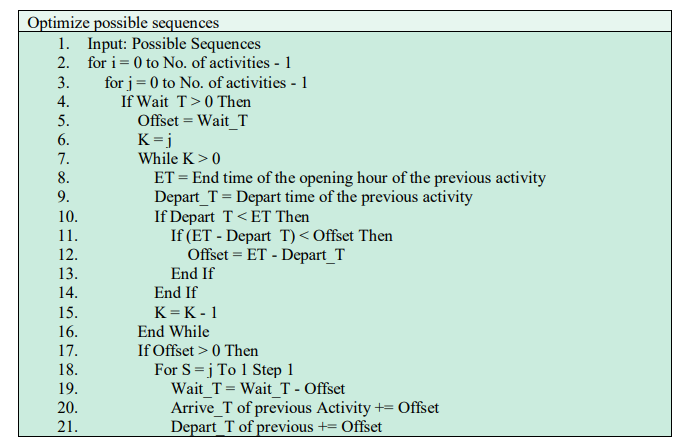

components, including monitoring, data storage, and transmission. Therefore, the data
transmission accounts for a significant share of total energy use. The energy consumption rate in
the sensor networks varies considerably according to their protocols[24]. We have proposed an
energy model for the usage. The following expression estimates the energy consumption for
sensing and transmitting the k-bit data under the assignation-based routing protocol.
𝐹𝑇𝑥(𝑘. 𝑑𝑖𝑠(𝑘𝑚, 𝑘𝑛
)) = 𝐸𝑒𝑙𝑒𝑐.𝑘 + 𝜉𝑎𝑚𝑝. 𝑘 (1)
Where 𝑑 𝑖𝑠(𝑘𝑚, 𝑘𝑛
) represents the distance between neighbouring nodes m and n, which is
calculated using Equation (2).
𝑑𝑖𝑠(𝑘𝑚, 𝑘𝑛
) = √(𝑥𝑚 − 𝑥𝑛)
2 + (𝑦𝑚 − 𝑦𝑛)
2
(2)
𝐸𝑒𝑙𝑒𝑐 represents the power required to maintain the transmission circuit in an operational state,
while.𝜉𝑎𝑚𝑝 refers to the energy consumed by the amplifier. To enable efficient signal
transmission, Equation (3) divides the amplifier consumption accordingly.
𝜉𝑎𝑚𝑝 = {
𝜉𝑓𝑠. 𝑑𝑖𝑠2
𝑖𝑓 𝑑𝑖𝑠 < 𝑑0
𝜉𝑚𝑝. 𝑑𝑖𝑠4
𝑖𝑓 𝑑𝑖𝑠 > 𝑑0
(3)
Here 𝜉𝑓𝑠 represents the power transmitted by the node to the inner range of communication, while
𝜉𝑚𝑝indicates the maximum power required for outer-range communication. Our energy model
includes two signal variation schema with the prototypes in multiple data paths. The
classification to be adopted is determined using the threshold value, 𝑑0as shown in the relation
given below:
𝑑0 = √(
𝜉𝑓𝑠
𝜉𝑚𝑝
) (4)
𝐸𝑅𝑥 = 𝐸𝑒𝑙𝑒𝑐. 𝑘 (5)
𝐾𝑜𝑣𝑒𝑟𝑙𝑎𝑝_𝑐𝑜𝑣𝑒𝑟 = 𝐿𝑜𝑣𝑒𝑟𝑙𝑎𝑝_𝑐𝑜𝑣𝑒𝑟/L (7)
0 Otherwise
0 Otherwise
optimal fitness value, and selected the smaller one as 𝑀𝑏𝑒𝑠𝑡. The previous optimal fitness of all
elements was compared to their current fitness, and the smaller value was chosen as the optimal
outcome 𝑁𝑏𝑒𝑠𝑡.

0, 𝑂𝑡ℎ𝑒𝑟𝑤𝑖𝑠𝑒 (20)




 International Journal of Computer Networks & Communications (IJCNC)