
IJCNC 04
ENHANCEMENT OF QUALITY OF SERVICE IN UNDERWATER WIRELESS SENSOR NETWORKS
Vinayprasad M S and Jayaram M N
Department of Electronics and Communication Engineering, JSS Science and
Technology University, Mysore, Karnataka.
ABSTRACT
Underwater Wireless sensor network (UWSN) has become a main topic in the research of underwater communication with more research challenges. One of the main issues in the UWSN communication process is Quality of Service (QoS). Therefore, for enhancing the QoS in the UWSN a novel Clustering Hello routing based Honey Badger GoogleNet (CHbHBG) model is proposed. Primarily, the required sensor hubs are placed in the underwater communication environment. Further, the energy usage of each node is monitored and energy-efficient cluster head is selected by the proposed mechanism. Moreover, the data rate resources were predicted and allocated at the channel using the fitness process of the model. The optimal allocation process improves the QoS in the network. To prove the efficacy of the system, the metrics including throughput, network lifetime, latency, energy consumption, PDR, transmission loss, and path creation time are validated and compared with the recent models. The developed model attained the higher network performance as 99.72% PDR, 949.2kbps throughput, 4004.31s network lifetime, and 230.84J energy consumption.
KEYWORDS
Underwater Wireless Sensor Networks, Routing protocol, Quality of Service(QoS), Cluster head, Honey badger optimization, Hello routing
- INTRODUCTION
UWSNs are a new and innovative way to monitor the aquatic environment in real-time. They have the potential to revolutionize a wide range of time-sensitive applications, such as tracking aquatic animals, collecting oceanographic data, preventing natural disasters, and monitoring environmental conditions [1]. Even though land is the principal habitat and location for human activity, it only makes up around 20% surface of the Earth. On the other hand, water bodies cover about 80% surface of the Earth. Similar to space exploration, ocean exploration offers humanity both essential opportunities and difficult problems” The underwater surroundings of the deep sea is almost impossible to explore. However, the advent of UWSNs, which are made up of Numerous independent and self-organizing sensor nodes (SN) has enabled group monitoring tasks and conduct research on the seabed’s natural resources [2,3,4].
UWSN has emerged as a ground-breaking technology. These networks, comprising small, strategically deployed SN in aquatic environments, have enabled the scientific community and various industries to delve into the depths of our oceans, unveiling their mysteries and harnessing valuable information. However, the successful operation of UWSNs hinges on the critical imperative of enhancing Quality of Service (QoS). This imperative arises from the unique challenges of underwater communication, where signals contend with signal attenuation, reflection, and dispersion. These challenges lead to increased latency, limited bandwidth, and the risk of data loss [5,34].
Many UWSNs and SNs are powered by finite energy sources, necessitating energy-efficient protocols to prolong their operational lifespans [6]. Ensuring the reliability and integrity of transmitted data is also paramount, especially in applications like marine research and offshore monitoring, where data accuracy is non-negotiable. Furthermore, low latency and excellent QoS are required for certain real-time applications. To compound the complexity, UWSNs must adapt to the ever-changing underwater environment, characterized by shifting water conditions and dynamic marine life [7,35]. Energy efficiency is also important in UWSNs because SNs are typically battery-operated and have restricted energy supplies [8]. Maintaining the applications’ QoS requirements while minimizing energy usage requires the implementation of QoS-aware protocols and algorithms [9].
Several techniques can be used to improve QoS in energy-efficient UWSNs [10]. These techniques may be divided into two categories: data-oriented techniques and network-oriented techniques. Data-oriented methods concentrate on minimizing the quantity of data that must be sent. Data aggregation, filtering, and compression may be used to achieve this [11]. Networkoriented techniques focus on improving the efficiency of the network itself. This can be done through routing protocols, medium access control (MAC) protocols, and power management schemes [12].
Energy-efficient underwater communication systems, adaptive routing protocols, and machine learning algorithms (ML) possess the capacity to improve QoS in UWSNs while still conserving energy [13]. ML can be used to design intelligent QoS-aware protocols and algorithms that can learn from the data and adapt to the shifting circumstances of the underwater world [14]. This could help to improve QoS performance by enabling the network to make better decisions about how to allocate resources [15]. Cross-layer design can be used to design QoS-aware protocols and algorithms that take into account the relationships among the network stack’s various layers [16]. This could help to improve QoS performance by enabling the network to make more informed decisions about how to optimize resource allocation and routing [17]. Improving QoS in energy-efficient UWSNs is a challenging task, but it is essential for many applications. The developed approach is exposed in Fig. 1. The primary significance of this work is summarized as follows,
- Initially, the needed amount of UWSN was created with the limited data rate.
- Consequently, novel CHbHBG was designed with sufficient features for allocating the resources.
- The cluster head (CH) was selected according to the energy consumption of every SN capability.
- Moreover, the required data resources of each UWSN node were predicted, and resources were allocated.
- Then, the QoS has been measured to estimate the designed model’s robustness.
- Finally, all network metrics were measured and compared to standard models.
The novelty of this research lies in integrating and modifying the GoogleNet and Hello routing protocol with the Honey Badger optimization algorithm. The optimization capabilities of the Honey Badger with the GoogleNet network enhanced the QoS and helped in identifying the optimal CH forwarder for a Node to enhance the QoS with an optimal data rate resource. The proposed model can adapt to changing underwater conditions, such as signal strength and noise level variations, improving the accuracy of routing decisions over time.
The article is arranged as follows, the merits and the limitations of the prevailing models are debated in section 2, the main problem that motivated the present research is discussed in section 3, the process of novel method developed in this research is described in section 4, the comparison of the outcomes are displayed in section 5, and the research’s conclusion is presented in Section 6.
2. RELATED WORKS
Ashwini et al. [18] proposed an Energy Optimization utilizing Routing Optimization (EORO) for UWSNs is a cutting-edge routing technique. Swarm intelligence is used by this optimization to choose the optimum transmit node for the transfer of data while maximizing QoS and energy efficiency. Each forwarder node’s residual energy, packet transfer capacity, node connectedness, and distance are the four components that the optimization takes into account while calculating fitness. To prevent packet collisions, and reduce consumption of energy as well as delay while increasing throughput, these configurations are carefully selected. According to experimental findings, it surpasses conventional routing approaches based on throughput, energy use, delay, as well as Packet Delivery Ratio. It may be less scalable than other routing protocols, as the number of parameters to tune increases with the size of the network.
Xingsi et al. [19] developed the enhanced artificial bee colony (EABC)- based clustering that uses less energy with a cross-layer based on the Optimisation algorithm Harris-Hawks routing strategy for WSN and k-medoids to attain enhanced quality-of-service (QoS) efficiency. QoSperformance measurements are computed across several nodes. According to the experiment’s findings, it is more QoS-efficient than the existing approach. By lowering the packet-loss ratio, increasing throughput, and lowering end-to-end delay, it boosts the effectiveness as well as efficiency of WSNs. It has a higher overhead than some existing algorithms because it needs to exchange more control messages with neighbor nodes to coordinate routing decisions.
Pramod et al. [20] developed an innovative, effective statistical channel framework for computation. They sought to create an ideal channel model, transmission framework, as well as protocol for routing for UWSN communication that was efficient in terms of energy delaytolerant, and QoS-enhanced. The suggested channel model aimed to construct an effective and accurate channel model for audio communication by incorporating both random topological alterations and fundamental physics notions of audio propagation. In contrast to conventional channel models, the suggested statistical model can offer more precise and immediate replies. The recommended routing protocol with repeated buffer flush improves this capability when used in vast UWSNs where QoS-focused highly essential Information exchange and energy-efficient (EE) transmission are important. It can be computationally expensive to implement, especially in low-power sensor nodes.
Pramod et al. [21] proposed a systematic random linear network coding (SRLNC) transmissionbased routing technique for UWSNs. The proposed approach is designed to improve throughput, computational complexity, delay, and energy efficiency in UWSNs. It achieves this by using several techniques, including, a low Galois field and low coefficient vector, minimal requirements for duplicate messages, An effective pre-coding approach in terms of computation, Improved FEC-based decoding, and iterative buffer flushing. In addition to being more EE and delayed resilient than current methods, the suggested SRLNC-routing strategy is also more robust and dependable. It can be computationally expensive to implement, especially in low-power sensor nodes.
Mamta and Nitin [22] proposed an energy-efficient localization technique for UWSNs using mobility and propagation delay prediction. The system model is made up of regular nodes (RN) surface buoys (SB) and anchor nodes (AN). SB floats on the water’s surface, AN Ordinary nodes are widely dispersed at different depths, and AN drift occurs at different depths. Every AN speed is assessed and recorded throughout each localization session using the AN mobility estimation approach. The precise localization is thus made possible by anticipating and adjusting for the propagation delay. Overall efficiency in energy use has increased, according to simulation results. The accuracy of the proposed scheme can be affected by the accuracy of the anchor node mobility prediction.
3. SYSTEM MODEL WITH PROBLEM
Applications including tactical surveillance, ocean pollution monitoring, and water resource exploitation were improved by the UWSN environment’s increasing popularity. The network consists of SN and the surface sink hub (SH) for data transmission to the base station (BS). Acoustic communication is a technology used for underwater communication. However, energy maintenance and improving the quality of service are the key processes for data reliability at UWSN. QoS is the main problem that impacts the availability of the UWSN service. The architecture of the UWSN with their problems is shown in Fig.1.

Fig.1. UWSN architecture and problems
Several research works were implemented for the UWSN; however, the QoS became less in many cases due to the limited data rate of each node. Considering this, the QoS improvement is considered for this study. In addition, for efficient prediction and QoS improvement, deep learning with an optimization procedure is used. In addition, here the QoS is improved by maximizing the throughput and network lifetime. For better network performance, data rate resources were estimated and assigned to every node. Finally, the comparison is made with the traditional approaches.
4. PROPOSED METHODOLOGY
The main objective of this work is to maximize throughput and network longevity to maximize QoS. Hence, a novel Clustering hello-routing-based Honey Badger Googlenet (CHbHBG) Mechanism has been introduced. Here, offering the required data rate resources for all the UWSN nodes are considered the major process. Finally, the throughput ratio and network longevity were measured to determine the UWSN network’s efficiency. Besides, all network parameters were measured and compared with all traditional studies. Fig. 2 illustrates the steps of the proposed technique.
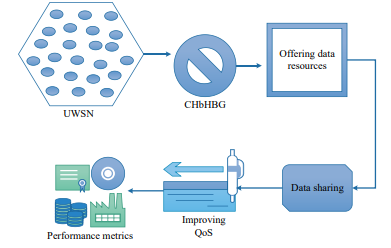
Fig.1. Proposed methodology
4.1. Node Initialization
The proposed method aims to allocate the data rate resources in the radio acoustic link of the UWSN to send the data packets that the node detected without interruption, which leads to increased QoS. Here the resources are allocated by the combined process of Honey Badger optimization [23] and GoogleNet [24]. The process is begun by the deployment of required nodes in the UWSN environment. The required node initialization process is shown in Eqn. (1).

Here the Underwater network (UN) is indicated as X , X n specifies the network nodes and z indicates the overall quantity of nodes. The nodes are initialized based on the concept of Google Net. The nodes gather the information underwater and send it to the SN are positioned at the water’s surface using an acoustic and radio connection. According to the link quality and availability, the transmission is done for the data from the SN.
After, the node initialization process, the proposed model utilized the Google Net structure for the selection of the best CH and offering data resources. GoogleNet is a type of deep convolutional neural structure. The features such as connectivity, residual energy levels, the distance between the nodes, and sink node (SN) distances were extracted from the sensor nodes’ data by the Google Net function to generate the search area for the CH selection. Here the Google Net includes the layers such as layers for input, convolution, pooling, inception, completely connected, and output. Utilizing these features extracted by Google Net, the honey badger function identifies the best optimal CH. The CH selection process is described as follows.
4.2. Cluster Head Selection
An energy-efficient cluster head is chosen to transfer the data with minimal energy usage after the positioning of the nodes. Here the CH is selected by evaluating the energy usage of each node. The energy-efficient CH was selected based on the intensity-defining function of the Honey badger. The selection CH process is explained in Eqn. (2).
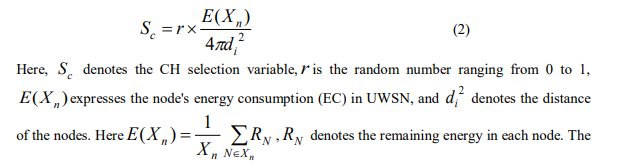
Google Net function keeps track of each node’s energy usage. Therefore, the CH is chosen based on its distance from the sink node and the quantity of energy it utilizes.
4.3. Offering Data Resources
The selected CHs obtain the information from the sub-node and transmit it to another CH or BS. During the data transmission, to enhance the QoS, optimal data rate resources must be allocated at the radio link. However, to allocate the resources, the data rate level should be determined initially. The data rate level determination has been carried out based on the density factor updating process of the Honey badger and is explained in Eqn. (3).

Here the data rate prediction variable is expressed as Pdr , c denotes the constant value, D( Xn) indicates the data present in each node, t defines the current iteration, and max t indicates the maximum number of data rate prediction iterations. At this phase, the data rate level required for sending the data is predicted. Further, to allocate the data rate, the flow rate of the link should be non-negative and the allocation is defined in Eqn. (4). The data rate allocation process is earned by the digging phase of the Honey Badger.

Here Ldr denotes the data rate allocation function, Ki denotes the SN, Dc is the amount of data present in each node of the UWSN, hn is the selected cluster heads, F denotes the honey badger that alters the allocation, n s indicates the other sub-nodes, Beta is the data rate allocation variable, and d represents the nodes’ distance information.
4.4. Data Sharing
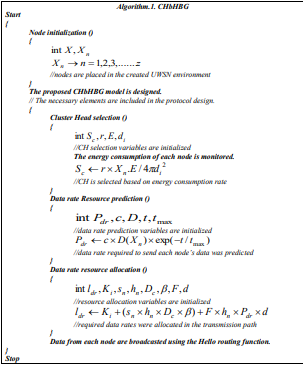
Following the method for allocating resources, the data from the nodes are broadcasted to the destination using the Hello routing function. The sub-nodes have a small amount of data to transmit while the CHs have a large amount of data. Once, the data rate has been allocated the specific sensor nodes start to broadcast the data. In the hello routing protocol, the Hello message that includes information is sent to the nearer neighbor node and maintains an internal neighborhood table. When the cluster head receives the data, the neighborhood table is updated. In this way, the information Nodes are sent to the sink node from the sensor via the selected CHs and then to the base station. The functions and process utilized in the proposed CHbHBG are explained in pseudocode format in Algorithm.1. The Algorithm inhibits all the expressions that are considered to complete the process of the QoS enhancement.
5.1. Case Study
This study was conducted to understand the simulation process of the proposed CHbHBG model with step-by-step simulation results. The necessary nodes are first set up in the simulated environment. The node initialization process for 50 and 100 nodes is displayed in Fig.3. The initialized sensor nodes collect the information of the underwater.

Fig.1. Node Initialization (a) 50 nodes, (b) 100 nodes
Further, to transfer the information from nodes to SH, an optimal cluster node is selected. Here the cluster nodes are selected on their EC rate. Using the Honey Badger function nodes consuming lower energy are selected as CH. The cluster selection process of the presented CHbHBG model for 50 and 100 nodes is shown in Fig.4. Here the nodes indicate the selected cluster heads. For 50 nodes network, 4 nodes are selected as CH, and for the network with 100 nodes, 10 nodes are selected as cluster heads.
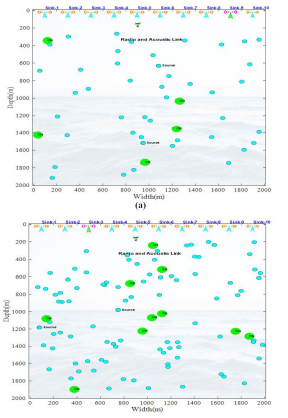
Fig.1. CH selection (a) 50 nodes (b) 100 nodes
After, the CH selection process, the data rate of each node needs to be identified for the resource allocation process. The data rate prediction process for 50 and 100 nodes in the simulation environment has been shown in Fig.5. Here the data rate required for Every node has a prediction and is shown.
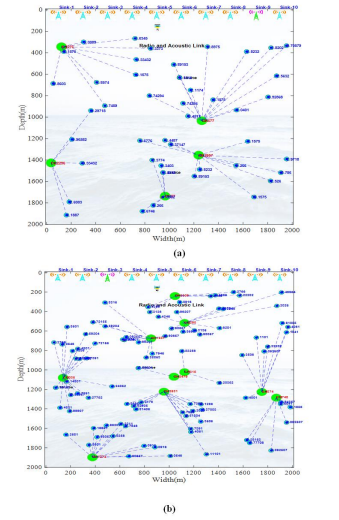
Fig.1. Data rate resource prediction and allocation (a) 50 nodes (b) 100 nodes
After the optimal resource allocation, the shortest path between the source and the sink hub is identified and the data is transmitted using the hello routing process. The data broadcasting process from the source to SH through the selected cluster heads for 50 and 100 nodes is displayed in Fig.6.

Fig.1. Data transmission (a) 50 nodes (b) 100 nodes
The efficiency of the developed model is evaluated regarding the network throughput, latency, PDR, lifetime, EC, and transmission loss.
5.2. Comparative Analysis
The working robustness in the created UWSN environment has been measured in terms of throughput, network lifetime, latency, EC, PDR, transmission loss, path creation, and simulation time. The metrics values attained for the present method are compared with the results of the prevailing models. The prevailing models that are considered to continue the comparative section are Whale optimized UN (WOUN) [25], Energy Efficient Multilayer Clustering Protocol (EEMCP) [26], Multipath Energy Aware Protocol (MEAP) [27], Ant Colony based Routing Protocol (ACbRP) [28], Time-Based Reliable Link (TBRL) [29], Depth Clustering Routing Model (DCRM), Transmission Adaptive Depth Routing (TADR) and Collision Aware Routing Protocol (CARP) [30], Elman Bat-based Hello Routing (EBbHR) [31].

Fig.1. Network lifetime comparison
The comparison of network lifetime for increasing node numbers is illustrated in Fig.7. Here the entire network lifespan of the developed approach is made a comparison with conventional literature such as WOUN, TADR, and CARP. The network lifetime attained for the WOUN method is the 1980s, 1798s, 1699s, 1557s, and 1380s for 100 to 500 nodes. Similarly, for the methods TADR and CARP, the attained network lifetime for different nodes are 720s, 730s, 809s, 863s, and 884s; 714s, 750s, 804s, 859s, and 898s. The network lifetime attained for the proposed model with varying nodes such as 100, 200, 300, 400, and 500 are 2494.2882s, 3196.6437s, 3744.5088s, 3782.608s and 4004.3192s. Here the lifespan of the created network is higher than the traditional network models.
5.2.2. Latency
The time taken for departed packets to reach the SH is measured as latency. It is the typical delay of all information packets flowing at the target from various sources. The time efficiency of the network can be calculated by latency or delay. The latency calculation is shown in Eqn. (5).

The comparison of latency values for varying nodes is shown in Fig.8. Here the latency values of the recommended CHbHBG model are compared with the conventional models such as TBRL and EEMCP. For the varying nodes the model TBRL attained the delay rate of 369.4ms, 319.6ms, 240.1ms, 198.6ms, and 159.4ms; also, the model EEMCP scored 610ms, 512ms, 436ms, 338ms, and 253ms. The model proposed model’s delay rate for nodes such as 100, 200, 300, 400 and 500 are 161.8484ms, 121.2393ms, 92.4923ms, 79.5943ms and 67.9194ms. The delay rate of the CHbHBG model is less than the existing models.
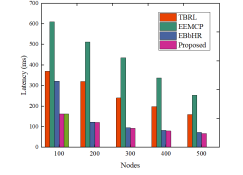
Fig.8. Latency Comparison
5.2.3. Energy Consumption
The total energy consumed by the network to gather and transmit data packets to the BS is known as EC. The size of the packet affects the EC of the network and the distance it needs to be sent. In the present research, energy usage is measured in Joules (J).
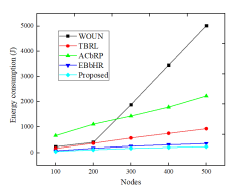
Fig.9. Energy consumption comparison
The energy usage comparison for the various methods is displayed in Fig.9. The EC values for the prevalent methods, namely WOUN, TBRL, and ACbRP, opposed to this, the suggested method use 48.4993 J, 113.1326 J, 165.496 J, 199.7867 J, and 230.8441 J for 100 to 500 nodes. The resulting values of CHbHBG uses less energy than other existing methods for all different numbers of nodes.
5.2.4. Throughput
One of the key metrics for the network efficiency measurement is throughput. The ratio of the total percentage of data packets sent to the SH to the time it takes for the packets to arrive at the SH is known as throughput. It validates the capacity that how much data can be processed in the created UWSN at a specific time. The formulation for throughput ratio calculation is shown in Eqn. (6).

Fig.10. Throughput comparison
The throughput comparison with the existing approaches is shown in Fig.10. The prevailing model WOUN scored the throughput as 188Kbps, MEAP scored 299Kbps, and TBRL scored 26.9Kbps. However, the throughput rate of the proposed network model is greater than other schemas which are valued at 949.2Kbps for 500 nodes.
5.2.5. Packet Delivery Ratio (PDR)
The PDR is determined by the ratio of adding together all of the data packets that arrive at the SH to the packets that leave the source nodes. The ratio of all transmitted packets from the source to all packets reached at the SH is used to calculate it. The formula for calculating average PDR is found in Eqn. (7).
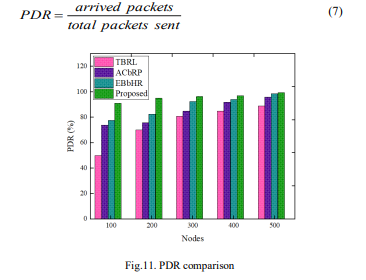
Fig.11. PDR comparison
The PDR for the suggested routing protocol was 91.4128%, 95.2683%, 96.5743%, 97.342%, and 99.721% for 100 to 500 nodes respectively. In this case, the PDR of CHbHBG is more than that of the other methods in use. The comparison graph is displayed in Fig.11.
5.2.6. Transmission Loss
Propagation delay is the term used to describe the loss of transmission in the underwater acoustic network. The lower the transmission loss increases the network communication efficiency. The transmission loss calculation is given in Eqn. (8).

Here the distance between the receiver and sender is indicated as t measured in meters, f is indicates the coefficient of absorption computed in dB/km.
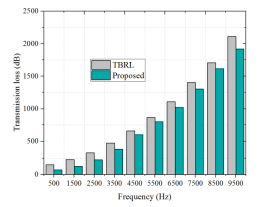
Fig.12. Transmission loss comparison
Fig.12. compares the transmission loss with the current protocol, TBRL. The suggested CHbHBG approach obtained a relatively low frequency of transmission loss for each variable when compared to the TBRL method. 71.445 dB, 127.009 dB, 223.259 dB, 387.31 dB, 601.59 dB, 798.782 dB, 1021.908 dB, 1302.295 dB, 1616.716 dB, and 1918.469 dB are the transmission losses that the proposed CHbHBG achieves for various frequencies, including 500 Hz, 1500 Hz, 2500 Hz, 3500 Hz, 4500 Hz, 5500 Hz, 6500 Hz, 7500 Hz, 8500 Hz, and 9500 Hz. Compared to other protocols, the presented routing model provided a very low transmission loss.
The entire performance of the designed model in the UWSN environment is compared with the current techniques to highlight performance improvement. The recent techniques considered for the comparison are Elman Bat-based Hello Routing (EBbHR) [31], Q-learning based Routing Protocol (QbRP) [32], and Route Focusing based Protocol (RFbP) [33]. These methods were tested in the same environment in the MATLAB platform, and efficiency metrics were evaluated. The performance comparison with these methods is shown in Table 2.

Table 2.. CHbHBG performance
The innovative CHbHBG achieved maximum Throughput and network lifetime of 949.2 Kbps and 4004.31sec, respectively. Furthermore, it requires less energy and has a short latency. Furthermore, the ideal routing path is immediately developed with a short distance, making transmitting data easy. The CHbHBG process focuses on the enhancement of QoS between sensor hubs employed within the created UWSN, improving network efficiency and reliability. The integration of Clustering Hello routing with Honey Badger GoogleNet identified the optimal QoS routing path for data transmission. It leads to better routing decisions and enhances the overall network performance. By enhancing the efficient CH for the routing and optimizing mechanism, the CHbHBG model reduces the network’s overall energy consumption.
CONFLICTS OF INTEREST
The authors declare no conflict of interest.
REFERENCES
[1] Kaveripakam S, Chinthaginjala R. Energy balanced reliable and effective clustering for underwater wireless sensor networks. Alexandria Engineering Journal. 2023 Aug 15;77:41-62.
[2] Akyildiz IF, Pompili D, Melodia T. Underwater acoustic sensor networks: research challenges. Ad hoc networks. 2005 May 1;3(3):257-79. International Journal of Computer Networks & Communications (IJCNC) Vol.17, No.2, March 2025 69
[3] Wang Q, Li J, Qi Q, Zhou P, Wu DO. A game-theoretic routing protocol for 3-D underwater acoustic sensor networks. IEEE Internet of Things Journal. 2020 Apr 17;7(10):9846-57.
[4] Wang B, Zhang H, Zhu Y, Cai B, Guo X. Adaptive Power-Controlled Depth-Based Routing Protocol for Underwater Wireless Sensor Networks. Journal of Marine Science and Engineering. 2023 Aug 9;11(8):1567.
[5] Shah SM, Sun Z, Zaman K, Hussain A, Ullah I, Ghadi YY, Khan MA, Nasimov R. Advancements in Neighboring-Based Energy-Efficient Routing Protocol (NBEER) for Underwater Wireless Sensor Networks. Sensors. 2023 Jun 29;23(13):6025.
[6] Ibraheem MK, Mohamed MB, Fakhfakh A. Energy Optimization Efficiency in Wireless Sensor Networks for Forest Fire Detection: An Innovative Sleep Technique.
[7] Kaveripakam S, Chinthaginjala R, Anbazhagan R, Alibakhshikenari M, Virdee BS, Khan S, Pau G, See CH, Dayoub I, Livreri P, Abd-Alhameed R. Enhancement of precise underwater object localization. Radio Science. 2023;58(9):1-29.
[8] Cui Y, Zhu P, Lei G, Chen P, Yang G. Energy-Efficient Multiple Autonomous Underwater Vehicle Path Planning Scheme in Underwater Sensor Networks. Electronics. 2023 Aug 3;12(15):3321.
[9] Kaur N, Verma S, Jhanjhi NZ, Singh S, Ghoniem RM, Ray SK. Enhanced QoS-aware routing protocol for delay sensitive data in Wireless Body Area Networks. IEEE Access. 2023 Sep 4.
[10] Alablani IA, Arafah MA. EE-UWSNs: A joint energy-efficient MAC and routing protocol for underwater sensor networks. Journal of Marine Science and Engineering. 2022 Apr 1;10(4):488.
[11] Messinis GM, Hatziargyriou ND. Review of non-technical loss detection methods. Electric Power Systems Research. 2018 May 1;158:250-66.
[12] Kanellopoulos D, Sharma VK, Panagiotakopoulos T, Kameas A. Networking Architectures and Protocols for IoT Applications in Smart Cities: Recent Developments and Perspectives. Electronics. 2023 May 31;12(11):2490.
[13] Shah SM, Sun Z, Zaman K, Hussain A, Ullah I, Ghadi YY, Khan MA, Nasimov R. Advancements in Neighboring-Based Energy-Efficient Routing Protocol (NBEER) for Underwater Wireless Sensor Networks. Sensors. 2023 Jun 29;23(13):6025.
[14] Wijesekara PA, Gunawardena S. A Review of Blockchain Technology in Knowledge-Defined Networking, Its Application, Benefits, and Challenges. Network. 2023 Aug 30;3(3):343-421.
[15] Khasawneh M, Azab A, Alrabaee S, Sakkal H, Bakhit H. Convergence of IoT and Cognitive Radio Networks: A Survey of Applications, Techniques, and Challenges. IEEE Access. 2023 Jul 10.
[16] Arifuzzaman BM. Cross-Layer Design in the Internet of Things (IoT): Issues and Possible Solutions.
[17] Zia K, Chiumento A, Havinga PJ. AI-enabled reliable QoS in multi-RAT wireless IoT networks: prospects, challenges, and future directions. IEEE Open Journal of the Communications Society. 2022 Oct 19;3:1906-29.
[18] Gavali AB, Kadam MV, Patil S. Energy optimization using swarm intelligence for IoT-Authorized underwater wireless sensor networks. Microprocessors and Microsystems. 2022 Sep 1;93:104597.
[19] Xue X, Shanmugam R, Palanisamy S, Khalaf OI, Selvaraj D, Abdulsahib GM. A hybrid cross layer with harris-hawk-optimization-based efficient routing for wireless sensor networks. Symmetry. 2023 Feb 7;15(2):438.
[20] Basavaraju PH, Lokesh GH, Mohan G, Jhanjhi NZ, Flammini F. Statistical channel model and systematic random linear network coding based qos oriented and energy efficient uwsn routing protocol. Electronics. 2022 Aug 18;11(16):2590.
[21] Basavaraju PH, Lokesh GH, Mohan G, Jhanjhi NZ, Flammini F. Statistical channel model and systematic random linear network coding based qos oriented and energy efficient uwsn routing protocol. Electronics. 2022 Aug 18;11(16):2590.
[22] Nain M, Goyal N. Energy efficient localization through node mobility and propagation delay prediction in underwater wireless sensor network. Wireless Personal Communications. 2022 Feb;122(3):2667-85.
[23] Hashim FA, Houssein EH, Hussain K, Mabrouk MS, Al-Atabany W. Honey Badger Algorithm: New metaheuristic algorithm for solving optimization problems. Mathematics and Computers in Simulation. 2022 Feb 1;192:84-110.
[24] Anand R, Shanthi T, Nithish MS, Lakshman S. Face recognition and classification using GoogleNET architecture. InSoft Computing for Problem Solving: SocProS 2018, Volume 1 2020 (pp. 261-269). Springer Singapore. International Journal of Computer Networks & Communications (IJCNC) Vol.17, No.2, March 2025 70
[25] Rathore RS, Sangwan S, Mazumdar S, Kaiwartya O, Adhikari K, Kharel R, Song H. W-GUN: Whale optimization for energy and delay-centric green underwater networks. Sensors. 2020 Mar 3;20(5):1377.
[26] Khan W, Wang H, Anwar MS, Ayaz M, Ahmad S, Ullah I. A multi-layer cluster based energy efficient routing scheme for UWSNs. IEEE Access. 2019 Jun 10;7:77398-410.
[27] Ahmed M, Salleh M, Channa MI, Rohani MF. RMEER: reliable multipath energy efficient routing protocol for underwater wireless sensor network. International Journal of Electrical and Computer Engineering (IJECE). 2018 Dec;8(6):4366-73.
[28] Zahra N, Khawatmi S, Fawaz Y. Energy Efficient Routing Protocol in UWSNs using ACO Algorithm. International Research Journal of Engineering and Technology (IRJET). 2021 May;8(5).
[29] Ali T, Irfan M, Shaf A, Saeed Alwadie A, Sajid A, Awais M, Aamir M. A secure communication in IoT enabled underwater and wireless sensor network for smart cities. Sensors. 2020 Aug 2;20(15):4309
[30] Sher A, Khan A, Javaid N, Ahmed SH, Aalsalem MY, Khan WZ. Void hole avoidance for reliable data delivery in IoT enabled underwater wireless sensor networks. Sensors. 2018 Sep 28;18(10):3271.
[31] Vinayprasad M S & Jayaram. M N (2024). Intelligent Efficient Routing and Localization in the Underwater Wireless Sensor Network to Improve Network Lifetime (EBbHR). International journal of Computer Networks & Communications. 16. 01-21. 10.5121/ijcnc.2024.16501.
[32] Nandyala CS, Kim HW, Cho HS, (2023) “QTAR: A Q-learning-based topology-aware routing protocol for underwater wireless sensor networks”, Computer Networks, Vol. 222, pp 109562.
[33] Rajshekhar SA, Biradar A, (2024) “An Efficient Framework for Localization Based Optimized Opportunistic Routing Protocol in Underwater Acoustic Sensor Networks- (RFbP)”, SN Computer Science, Vol. 5, No. 5, pp 520.
[34] Gulista Khan and R.K. Dwivedi, (2018) “Energy Efficient Routing Algorithm for Void Avoidance in UWSN Using Residual Energy and Depth Variance”, International journal of Computer Networks & Communications. [35] Sihem Souiki et. al “FUZZY BASED CLUSTERING AND ENERGY EFFICIENT ROUTING FOR UNDERWATER WIRELESS SENSOR NETWORKS” International Journal of Computer Networks & Communications (IJCNC) Vol.7, No.2, 2015.
AUTHORS
Vinayprasad M S is currently working as an Assistant Professor in the Department of Electronics and Communication Engineering, JSS Science and Technology, Mysuru. He completed his M. Tech in Networking and Internet Engineering from SJCE in the year 2014. He is currently pursuing his Ph.D. at JSS Science and Technology University. His research area of interest includes Networking, Storage Networking, Communication and Internet of Things.

Dr. Jayaram M N is currently an Associate Professor at the Sri Jayachamarajendra College Engineering, he has teaching experience of more than 31 years in the areas of mobile and optical Communication. He obtained his PhD at the University of Mysore and ME in IISC, Bangalore and participated in several high-profile conferences. His research area of interest includes underground communication, microwave and antennas, RF and Optical Communication.


 International Journal of Computer Networks & Communications (IJCNC)