
IJCNC 01
A Comparative Study of Cooperative and Non-cooperative Wideband Spectrum Sensing in Cognitive Radio Networks for 5g Applications
Blessing C. Dike, Cajetan M. Akujuobi and Shumon Alam, A&M University Prairie, USA
ABSTRACT
The rapid advancements in 5G technologies have created an unprecedented need for efficient spectrum utilization to support increasing data traffic and diverse communication services. In this context, accurate and reliable spectrum sensing is essential. This study explores wideband spectrum sensing strategies, comparing non-cooperative cognitive radio (CR) techniques with cooperative methods across multiple subbands. A novel cooperative wideband spectrum sensing framework was developed, incorporating a K outof-N fusion rule at the fusion center to make optimal decisions by selecting an appropriate K for a given number of cooperating CRs. This approach addresses noise uncertainty, a common challenge in traditional non-cooperative energy detection methods, particularly in 5G environments under Additive White Gaussian Noise (AWGN) conditions, assumed to be identically and independently distributed (i.i.d.). However, while cooperative sensing significantly improves detection in low signal-to-noise ratio (SNR) scenarios with higher false alarm rates (between 0.5 and 1), our findings reveal that it does not consistently outperform non-cooperative methods at very low false alarm rates (0.01 and 0.1) under poor SNR conditions. These findings highlight the need for further research to enhance cooperative sensing strategies for various operational environments.
KEYWORDS
Cooperative wideband spectrum sensing, non-cooperative wideband spectrum sensing, energy detection, additive white gaussian noise, hard fusion rule, Cooperative Radio.
1. INTRODUCTION
The Federal Communications Commission (FCC) plays a vital role in managing the radio frequency (RF) spectrum in the United States, supervising a practical regulatory framework for spectrum sensing, sharing, and management. This framework allocates spectrum to fixed licensed owners – primary users (PUs) and flexible, unlicensed secondary users (SUs). While the fixed spectrum often needs to be utilized, the unfixed spectrum faces congestion challenges heightened by the rapid increase of Internet of Things (IoT) devices. The limited spectrum available struggles to accommodate these emerging technologies, necessitating innovative solutions. Cognitive radio (CR) technology enhances spectrum utilization. It dynamically detects underutilized bands within the wireless spectrum and adapts its transmission parameters, ensuring a seamless information flow [1]. Spectrum sensing and adaptation are the main functions of cognitive radio. [2]. This adaptability includes modifications to transmission power, modulation, and frequency bands to minimize interference with PUs and adjust for the possible re-emergence of PUs during SU transmissions. SUs initially perform spectrum sensing to identify frequencies not occupied by PUs. Post-detection, SUs adjust their transmission characteristics to exploit these ‘spectrum holes’ effectively, as seen in Figure 1 while ensuring minimal interference with existing PUs. This process requires reliable detection metrics, notably the probability of detection (PD) and the probability of false alarm (PFA). PD measures the accuracy of detecting PUs’ presence or absence, while PFA indicates the erroneous reporting of PUs’.
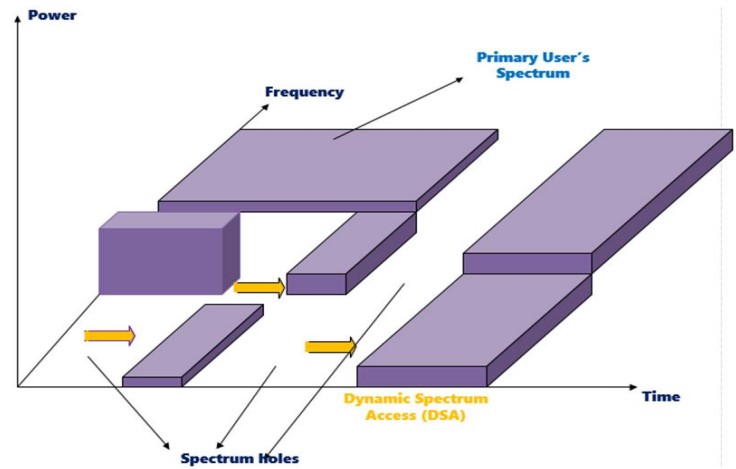
Figure 1. Underutilized Spectrum Bands
However, the performance of these detection mechanisms can be significantly compromised by factors such as multipath effects, hidden node issues, and shadowing, particularly in noncooperative spectrum sensing contexts [3,4]. Cooperative spectrum sensing was introduced to address these challenges and is gaining traction among researchers. This method enhances sensing accuracy by enabling SUs to share sensed information with a centralized fusion center, leveraging collective data to improve decision-making processes under diverse environmental conditions. The authors in [5] researched the evaluation of hard fusion sensing methods under the AWGN and Rayleigh channels. They believed that the OR rule performed better than other fusion rules without considering the accuracy and increased the false alarm rate of the OR rule under poor SNR. Chandra Mohan Dharmapuri et al. analyzed different fusion rules for cooperative sensing. They compared OR, AND, and Majority fusion rules and found the Majority rule to have the best performance in terms of PD and probability of channel state as occupied [6].
Cooperative wideband spectrum sensing enables dynamic access to unused spectrum in 5G networks, thus enabling efficient use of available resources and improving network throughput. Maria Trigka et al. [7] propose an efficient method for cooperative spectrum sensing using diffusion strategies. To improve spectrum sensing accuracy, the authors utilize the spatial diversity of secondary users (SUs) in changing network conditions and use the Adapt-ThenCombine (ATC) strategy for distributed cooperation among SUs, providing enhanced performance under different power spectrum scenarios. Gupta, V. et al. [8] apply evolutionary algorithms to improve spectrum sensing in CRNs. They researched throughput maximization while ensuring efficient spectrum usage, addressing the challenges caused by the increasing demand for wireless communication in 5G environments.
Cooperative wideband spectrum sensing is essential in Internet of Things (IoT) applications in 5G, where massive connectivity requires efficient and reliable spectrum usage without interference to primary users. Mengistu, F.G. et al. [9] implemented universal filtered multicarrier (UFMC) transmission to increase spectral efficiency and reduce out-of-band emissions prevalent in traditional techniques like orthogonal frequency division multiplexing (OFDM). UFMC allows the individual filtering of sub-bands, which reduces interference and improves the sensing quality. It is relevant in 5G networks, where efficient sharing is critical for combating issues in wireless bandwidth.
In high-capacity 5G applications, cooperative sensing ensures better spectrum sharing across wide bands, which leads to higher data rates and improved network performance in enhanced mobile broadband (eMBB). Junhee Kim et al. [10] explain optimizing detection performance by modifying the secondary user numbers involved in the cooperative sensing process in their paper. The modification enables a balance between improving detection accuracy and minimizing sensing delays, which is crucial for 5G applications that demand real-time responses, such as eMBB and ultra-reliable low-latency communications (URLLC). Dikmese S. et al. [11] showed that the proposed filter bank-based cooperative spectrum sensing significantly outperforms traditional sensing techniques, particularly in scenarios with high interference and poor channel conditions. The proposed method is designed to support the high bandwidth and low latency demands beyond 5G (B5G) by ensuring that spectrum holes (unused frequencies) are accurately identified for secondary use. The study measures up with the requirements of B5G networks, where ultra-reliable low-latency communications (URLLC) and massive machine communication {mMTC} necessitate efficient spectrum efficiency.
Security of the spectrum will enable greater availability of the spectrum. In their paper, Rangaraj, N et al. [12] focus on improving the security and accuracy of cooperative spectrum sensing in cognitive radio. Two algorithms, such as the Generic algorithm (GA) and particle swarm optimization (PSO), are applied to achieve spectrum sensing accuracy, security, and robustness, especially in an environment with low trust in the participating SUs.
Integrating K-out-of-N decision rules at the fusion center enhances detection accuracy, crucial in 5G environments where efficient and reliable spectrum management is paramount. This paper examines the performance of non-cooperative and cooperative spectrum sensing methods tailored for energy detection (ED) in 5G environments, specifically within Additive White Gaussian Noise (AWGN) and individually and identically distributed (i.i.d) contexts. We developed a simulation to determine the optimal average proportion of decisions required by CRs with an optimal k in the K-out-of-N rule under differing false alarm rates. This systematic approach maximizes PD while maintaining PFA within acceptable limits.
The rest of the paper is arranged as follows: Section II presents the concept of non-cooperative spectrum sensing and clearly explains the energy detection (ED) technique and non-cooperative wideband spectrum sensing with subbands. In section III, we explained the concept of cooperative sensing approaches, where we explored the overview of cooperative spectrum sensing and cooperative wideband spectrum sensing with subbands, with the implementation of an optimal value for k needed for the cooperating CRs in k-out-of-N rule algorithm to solve the problem of noise uncertainty in ED in practical scenarios. The simulation results in section IV detail the experimental setup, analyze the performance of some fusion rules, and compare the results of non-cooperative and cooperative spectrum sensing. We concluded the paper in Section V.
2. NON – COOPERATIVE SPECTRUM SENSING METHODS
Different detectors’ spectrum sensing decisions are based on a binary hypothesis model whereby the signal received might be noise or signal with some noise components.
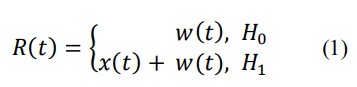
Where x(t) depicts the transmitted signal of the PU observed by the SU, R(t) is the SU’s received signal, and w(t) is the additive white Gaussian noise (AWGN). The two hypotheses, H0 and H1, assume that the PU is absent or present, respectively.
Non-cooperative sensing is regarded as narrow-band spectrum sensing. This is because the detectors individually sensed the spectrum. The non-cooperative spectrum sensing techniques are energy detectors, matched filter Detectors, cyclostationary feature detectors, eigen value detectors, and preamble detectors [13]. This section explains the energy detection technique and demonstrates the workings of non-cooperative wideband spectrum sensing.
2.1. Energy Detection
An energy detector (ED) is a non-coherent detector that measures the signal energy received from a particular frequency band by measuring the signal energy received and compares it with an established threshold. The threshold is set considering the value of the noise power. If the signal energy of the received signal lies above a set threshold, the band is declared busy; otherwise, the band is idle and can be accessed by a cognitive user [14,15]. Figure 2 is the architecture of the ED.

Figure 2. Underutilized Spectrum Bands
ED does not need prior knowledge of the signal’s carrier frequency, phase, or modulation type. Not having this knowledge makes ED to be susceptible to noise uncertainty. It is vulnerable to interference from other users and struggles with hidden node problems, especially when the primary user (PU) signal is weak or occluded.The decision statistics for energy detection in the time domain are based on the Neyman-Pearson formula:

Where N denotes the number of samples, x[n] is the sampled signal. A decision for the primary user’s presence or absence is made if ‘𝜓’ exceeds a threshold, which is calculated based on the noise floor to maintain a specific false alarm rate. In the frequency domain, energy detection measures the power P(f) of the received signal at the output of a bandpass filter with bandwidth by the method of periodogram [16].
2.2. Non-Cooperative Wideband Spectrum Sensing
Non-Cooperative Wideband Spectrum Sensing is the process by which a cognitive radio (CR) autonomously identifies and detects signals across a wide range of frequencies [17]. For wideband non-cooperative sensing, the received signal of a CR is shown to be divided into subbands to emulate the PU subbands as shown in Figure 3:
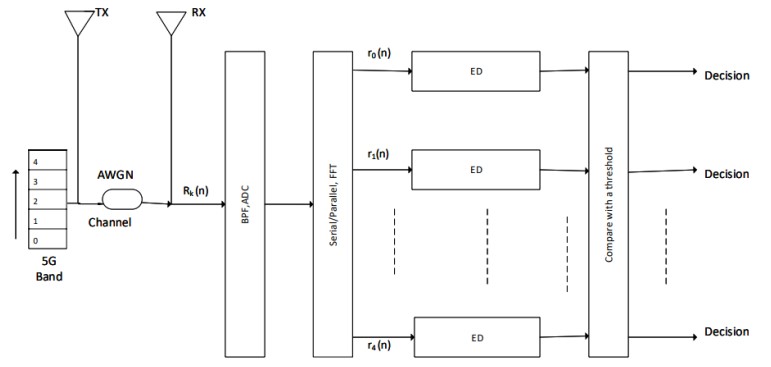
Figure 3. Architecture of Non-cooperative Wideband Spectrum Sensing
The signal from the PU is corrupted by AWGN and is received by the receiving antenna. Under the null hypothesis (H0), the received signal 𝑅 𝑚 (𝑛) for subband m at n is equal to 𝑊𝑚(𝑛) Under the alternate hypothesis (H1), the received signal,𝑅𝑚 (𝑛) for subband m at n is equal to the transmitted signal 𝑋𝑚 (𝑛),scaled by the channel gain and the added noise, 𝑊𝑚(𝑛).
Where each subband m of a single CR with one antenna is defined as:

𝑅𝑚 (𝑛), 𝑤𝑚(𝑛), 𝑥𝑚 (𝑛) is modelled in matrix form as:
𝑅𝑚 (𝑛) = [ r (0), r (1), r (2), ……………… ,rm-1(n)]
𝑤𝑚(𝑛)= [ w (0), w (1), w (2), ……………,wm-1(n)] (5)
𝑥𝑚 (𝑛)= [ x (0), x (1), x (2), …………….., xm-1(n)]
Where 𝑟𝑖 (𝑛) = [ 𝑟𝑖 (0), 𝑟𝑖 (1), 𝑟𝑖 (2),… … … … … , 𝑟𝑖 (𝑁 − 1) and is the received signal in the i-th subband. , 𝑛 = 0,1,2, … , 𝑁 − 1 is the observational sample sequence in the i-th subband, (i Є {0,1,2,, M-1} and N is the total number of samples used for sensing.
Considering Figure 3, the received signals, 𝑅𝑚 (𝑛) are filtered and conditioned with BPF, ADC and FFT, to remove noise and interference, ensuring the signals are suitable for further processing.
The energy, Yn, is computed for each of the subbands and given as:
𝑌𝑛 = ∑𝑁−1𝑛=0 |𝑅𝑚 (𝑛)| 2 (6)
The calculated energy is compared with a set threshold to decide if some PU channels are occupied. The threshold 𝜆 is calculated in Equation 7 and used for energy detection (ED) under the assumption of complex additive white gaussian noise (AWGN).
𝜆 = 𝑄 −1(𝑃𝑓). √2(𝑃𝑠 + 𝜎 2 𝑁 ) (7)
Q -1 is the inverse Q function, and Pfis the desired false alarm probability. The threshold is correctly set to maintain a specific probability of false alarm, Pf, considering noise power per sample, 𝜎 2 , 𝜎 2 𝑁 is the total noise power, and Ps being the signal power. Q is the Q-function describing the tail probabilities of the Gaussian distribution, 𝜎 2 is the noise power and the variance of AWGN, N is the number of samples per cognitive user per subband and λ is the detection threshold.
3. COOPERATIVE SPECTRUM SENSING METHODS
This section will discuss the cooperative spectrum sensing methods, starting with an overview of cooperative sensing.
3.1. Cooperative Sensing Overview
Cooperative sensing improves detection accuracy through the cooperation of individual detection and by having the benefit of spatial diversity, thereby combating some spectrum sensing problems such as shadowing, fading, and receiving uncertainty issues. All the secondary users are distributed over the entire cognitive radio network (CRN) over a specified distance from the PU transmitter. Each SU senses the whole band and sends its local binary decisions (“1” or “0”) to the fusion center, which makes the final decision. The cooperative spectrum sensing model architecture is shown in Figure 4 below:
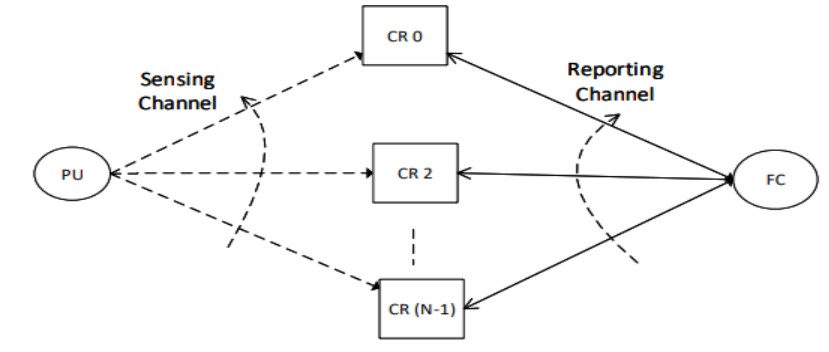
Figure 4.Cooperative Spectrum Sensing System Model
The three steps in the cooperative sensing process are [18]:
- A particular band of interest is individually sensed by cooperating cognitive radios (CRs)
- he Fusion center receives the sensed results from all cooperating CRs via a control channel.
- The fusion center combines all the received sensed information, makes decisions for the presence or absence of a primary user (PU), and reports to the CRs.
By actively utilizing the benefit of spatial diversity, the issues emanating from noise uncertainty in the energy detector are solved by the CR’s cooperation in sharing their individual information at the fusion center, which makes a final binary decision on the primary user’s presence or absence. The cooperative sensing’s two primary schemes are soft fusion and hard fusion schemes. In soft-data fusion schemes, all CRs send their sensing data as received energies or soft values to the fusion center without making a local binary decision. Soft-data fusion schemes that different researchers have reviewed are square law selection (SLS), maximal ratio combining (MRC), and selection Combining (SC). In the hard-decision fusion rule, different CR users sense the spectrum and report their local binary decision to the fusion center. Different hard-decision fusion schemes such as OR-rule, AND-rule, Majority rule, and K-out-of-N rule are employed to make a binary decision by each CR user[19-21].
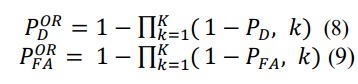
3.1.1. OR Fusion Rule
The logical OR rules establish the presence of a PU if at least one SU detects it.
3.1.2. AND Fusion Rule
The AND fusion rule only decides if all the SUs detect the signal.

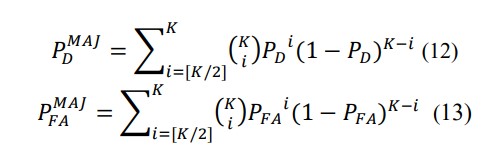
3.1.3. MAJORITY Fusion Rule
For the Logical Majority rule, a consensus is made if half or more of the SUs detect the presence of the PU.
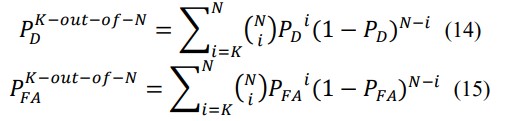
3.1.4. K-out-of-N Fusion Rule
A decision is made with few k that can correctly detect the signal out of K positive outcomes of N CRs.
3.2. Cooperative Wideband Spectrum Sensing
3.2.1. Architecture Design
The architectural design of the cooperative wideband spectrum sensing is as shown in Figure 5.
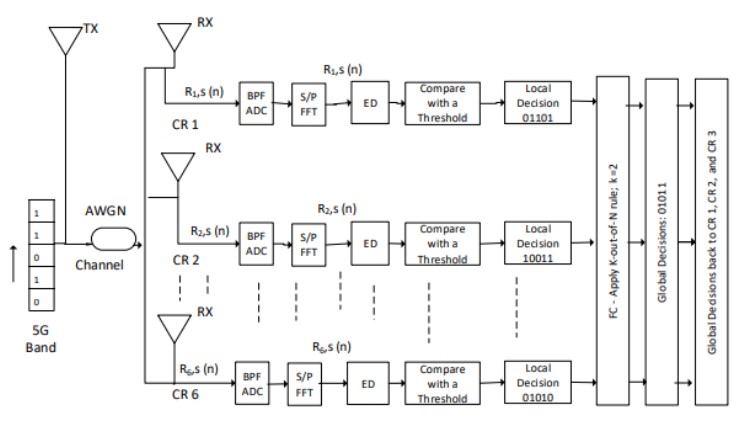
Figure 5.Cooperative Wideband Spectrum Sensing for 6 Cognitive Radio (6CRs)
Here, we partitioned the received signal into five subbands for a channel bandwidth of 100 MHz, giving a total bandwidth of 500 MHz from 3.3 GHz to 3.5 GH to reduce the design’s complexity. We implemented the energy detection (ED) technique because of its non-coherency and simplicity, and we proffered a solution to the issue of noise uncertainty by implementing cooperative sensing.Each cognitive radio (CR1-CR6) receives an analog serial signal through its antenna and contains a wide range of frequency components from various primary user (PU) subbands. The bandpass filter (BPF) is applied to the analog signal to remove frequencies outside the desired bandwidth to prevent aliasing in subsequent stages. After FFT, each frequency component or subband has its energy calculated by summing the squares of the magnitude of the FFT output component, representing the power at each frequency. Energy detection is crucial in spectrum sensing as it determines the presence of a signal in a frequency band based on the energy content within that subband. The local binary decision output from each subband of the CR is sent to the fusion center, which aggregates these decisions using k-out -of-N to make a global decision. A soft optimal k, “2,” is implemented for six CRs, and the FC makes a final decision on the state of the spectrum. This decision is sent back to each cognitive radio, which can transmit utilizing the free PU’s band.
3.2.2. The Model
The system is modeled as a binary hypothesis, which can be either null, 𝐻𝑜 𝑘 or true, 𝐻1 𝑘 hypothesis at a given state [10].

Where 𝑆𝑚 𝑘 (𝑛) , 𝑋𝑚 𝑘 (𝑛) , and 𝑊𝑚 𝑘(𝑛) are the received, primary user, and the noise signals, respectively.
The model in matrix form is given as:
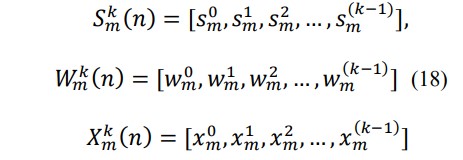
Model Assumptions:
- At each cognitive radio (CR), we take the noise to be additive, white, gaussian and complex, which is individually and identically distributed (i.i.d) across all CRs
- All CRs are also assumed to be synchronized during the sensing and reporting period.
- The reporting channel through which the local decisions are communicated to the FC is error-free.
The model involves multiple cognitive radios working together to determine the state of the primary user (PU) within a frequency band of 3.5GHz, characterized as a 5G mid-band. The 3.5 GHz band is mainly used in urban and sub-urban coverage, balancing coverage and capacity with better penetration and higher speeds than other higher bands. The received signal passes through the band pass filter, allowing the specifically chosen band to pass through while rejecting other frequencies. This helps filter out noise, and the detection strategy is the same as in the noncooperative spectrum sensing described above. Each CR performs local spectrum sensing using an energy detector defined as:

The decision at each CR is based on comparing 𝑌𝑚 with a threshold, 𝜆m
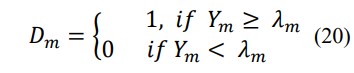
For a real AWGN channel, the threshold is calculated using the inverse Q-function and the chosen PFA and is given as:

Where 𝑄−1 is the inverse Q-function for the chi-square distribution, N is the number of samples. The decision, 𝐷𝑚 from all the CRs are sent to a centralized fusion center to perform a global decision. The fusion center aggregates the local binary decision using a fusion rule. In this paper, we implemented a hard decision rule, k-out-of-N, and we performed soft decisions by manually selecting the optimal k based on the number of CRs performing spectrum sensing. The final decision, D, by the fusion center is as follows:
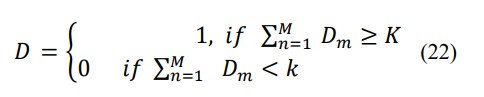
Where D is the final decision on the presence or absence of the primary user, 𝐷𝑚 is the local binary decision from the m-th CR. The decision is “1” if PU is present and “0” if otherwise. M is the total number of CRs involved in the sensing, and k is the threshold number of accurate decisions required to declare the presence of the primary user. The performance matrix is based on the probability of detection and the probability of false alarm.
The probability of detection relies on the signal power 𝜇, the noise power 𝜎2 and the number of samples N. If the signal power is greater than the noise power, the probability of detection can be calculated assuming a non-central Chi square distribution of the test statistics under Hi, which signifies that the signal is present, and the PD is given as:
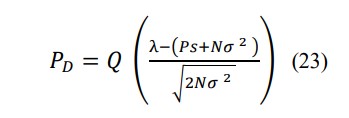
Where the signal power is 𝑃𝑠, and 2N is the degree of freedom that accounts for the real and imaginary components of the complex samples.
The PFA is formed under the noise-only signal and given by:
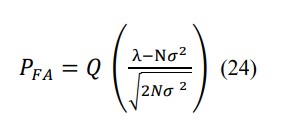
Q is the Q-function describing the tail probabilities of the Gaussian distribution, which is the noise power and the variance of AWGN. N is the number of samples per cognitive user per subband and is the detection threshold.
The K-out-of-N data-fusion rule is best for scenarios where resources are limited or when reducing the system’s complexity and power consumption since not all N cognitive users are involved in the decision process. The detection and false alarm probabilities are calculated based on binomial distribution and a single CR’s PD and PFA.
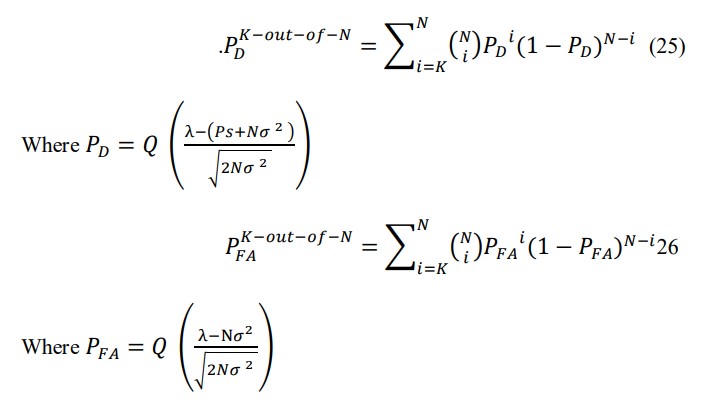
Algorithm Comparison Between Single CR and Cooperative Wideband Spectrum Sensing with multiple CRs (3CR) with K-out-0f-N Data-Fusion Rule
Input: numCRs, SNR_range, Pfa, MaxPfa, Thresholds, Noise Power
Output: NonCoopPd, CoopPd, OptimalK – Optimal Num. of CRs required to declare detection
1: Initialize: comparison arrays for nonCoopPd and CoopPd across SNR_range
2: For each SNR in SNR_range, do:
3: Compute detection thresholds for each CR based on noise power and pfa
4: If numCRs == 1:
5: Compute NonCoopPd using the threshold for a single CR
6: Else:
7: Initialize local decisions for each CR
8: For each CR, compute local Pd using the threshold and current SNR
9: Initialize maxPd to 0 and optimal k to 1
10: For K =1 to numCRs
11: Calculate global decisions by applying the k-out-of-N rule across CR’s local
12: compute CoopPd and pfa for global decisions
13: If pfa <= Maxpfa and pd > maxpd then
14: optimal k = k
15: maxPd = CoopPd
16: End if
17: End for k
18: Store the optimal k for the current SNR
19: End for each SNR
20: Return NonCoopPd, CoopPd, and the arrays of values of optimal k correspondto each SNR
21: End Algorithm
The algorithm shows steps involved in comparing non-cooperative and cooperative detection probabilities in cognitive radio spectrum sensing. Each CR computes its detection threshold based on its noise power and false alarm probability. From the algorithm, we can observe that before cooperative decision-making, an individual probability of detection is calculated to establish a baseline, which in this case is the NonCoopPd. The k-out-of-N rule is applied where the signal’s presence is notified if at least ‘k’ out of ‘numCRs’ CRs detect the signal. The algorithm iterates over possible values of k to find an optimal number that maximizes the probability of detection without exceeding the maximum acceptable PFA. We soft-coded ‘k =2’ for 6CRs to understand the implementation of ‘k’ from many cognitive radio users in the network. Once a “k” success is made, the fusion center takes a global decision. It simultaneously communicates the result to each CR in the process to enable them to access the available spectrum band.
4. SIMULATION AND RESULT
4.1. Experimental Set-Up
The Keywords This section describes the steps and methodology used to investigate and compare cooperative and non-cooperative wideband spectrum sensing under 5G environments using Energy Detection (ED) algorithms. The procedure details the simulation setup, signal characteristics, parameters, and essential variables.
- Channel Model: The simulation assumes that the Primary User (PU) operates in a 5G environment under Additive White Gaussian Noise (AWGN) conditions. The noise is identically and independently distributed (i.i.d.) across the sub-bands.
- SNR Conditions: The experiments are conducted under very poor signal-to-noise ratio (SNR) conditions, ranging from -20 dB to -8 dB, to reflect the challenging detection environment typically seen in 5G scenarios.
- Sub-band Division: The wideband signal is divided into five sub-bands, each with its energy detection mechanism. This approach is used for both cooperative and noncooperative spectrum sensing.
- Energy Detection Threshold: A threshold-based decision rule is applied to each sub-band. The Primary User is considered present if the detected energy exceeds the set threshold. The threshold is determined based on the noise floor information. This step applies to noncooperative wideband spectrum sensing, where only local decisions are made at each cognitive radio (CR).
- Cooperative Wideband Spectrum Sensing: In cooperative spectrum sensing, after local decisions are made in each sub-band, the results are sent to a fusion center, which makes a global decision based on the aggregated local decisions.
- K-out-of-N Fusion Rule: We implemented the K-out-of-N fusion rule, a hard decision rule that allows for flexible tuning to improve decision-making accuracy. It is energy efficient and has lower computational complexity. The false alarm rate for this rule is minimal under poor SNR conditions. The performance of this fusion rule is demonstrated in simulation plots, compared with other hard fusion rules.
- Performance Metrics: The key performance metrics considered are the Probability of Detection (PD) and the Probability of False Alarm (PFA). The PD vs. PFA plots are generated at varying SNR levels, such as -20 dB to -8 dB, to represent poor environmental conditions encountered in real-life settings. PD vs. SNR plots are generated at varying PFA values, chosen as 0.01, 0.1, 0.5, and 1.
- Our interest in Low PFA Values: Our primary focus is on PFA values of 0.01 and 0.1, as higher PFA values may lead to false results, compromising accuracy. Since accuracy is the primary concern, the FCC has adopted a standard of PFA less than 0.1 and PD of 0.9 or higher, which aligns with our objective.
4.2. Performance Analysis of Hard Fusion Rule
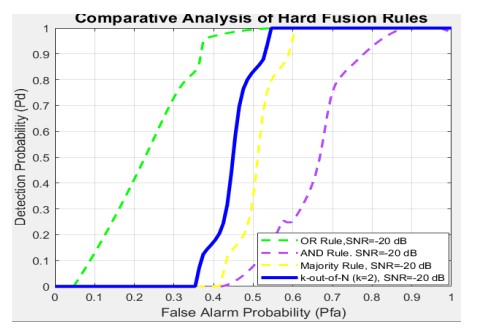
Figure 6.Comparative Analysis of Hard Fusion Rules for 6CRs
In Figure 6, we considered the PFA range of 0.01 to 1 and SNR of -20 dB. The simulation analysis of the fusion rules is performed in MATLAB and is analyzed as follows:
- The OR fusion rule has the highest detection but a high risk of false alarms. It reached the detection probabilities of around 0.6 and 0.9, as it depends on only one CR to declare detection. It has the lowest computational complexity and is most energy efficient as it requires minimal processing. However, it sacrifices detection accuracy, which may be more pronounced in poor SNR conditions.
- The AND fusion rule has the least detection probability at this range since it requires all CRs to agree before a decision can be made by the fusion center and is most likely to miss detection. It is close to zero for PFA < 0.1 and begins to improve detection probability after PFA > 0. 3.. It has the highest computational complexity and the least energy efficiency, especially in poor SNR, since all CRs must sense and report positive detection before making a decision.
- The MAJORITY fusion rule has moderate detection and a bit of balance between detection and false alarm probability. It shows detection capability between 0.4 and 0.6 and better performance than OR and AND fusion rules. Its computational complexity and energy efficiency are moderate in this context but more extensive as the number of CRs increases, as more than half of the CRs are required to declare a PU present before a final decision can be made.
- The k-out-of-N has the best balance between detection and false alarm probabilities and is ideal for use in poor SNR where false alarm and miss detection can be controlled. The complexity is moderate as the fusion center must compare a threshold ‘k’ with the number of positive outcomes. Its energy efficiency is high as it does not require every CR to detect the primary user. The tunability of K-out-of-N makes it flexible for managing PFA.
Table 1. Summary of Fusion Rules Performance Analysis

4.3. Performance Analysis of Cooperative and Non-cooperative Wideband Spectrum Sensing
All simulations were performed in MATLAB R2023b to assess the performance of cooperative and non-cooperative sensing techniques under complex AWGN, which is independently and identically distributed in a 5G wireless network environment. Parameters such as signal-to-noise ratio (SNR), number of CRs, and PFA are varied to determine the probability of detection (PD). We implemented a maximum of 6CRs with k=2 for the cognitive radio network at a 3.5 GHz frequency, and the threshold was set based on the noise floor and acceptable false alarm limit.
Table 2. Simulation Parameters
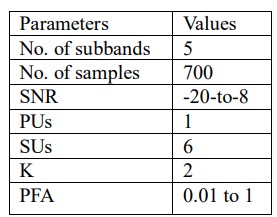

Figure 7. Plot of PD versus PFA for 1 CR and 3CRs at K =2 under varying SNR
Considering Figure 7, with only three cognitive radios (3CRs), with k= 2, the cooperative sensing performs less poorly at low SNR compared to the single CR. The reason is that the noise in individual measurements might not be well averaged out with fewer cognitive radios, leading to poor performance, especially at lower PFA and very low SNR, as seen in the plot. There is a tendency that 2 out of 3 CRs might be affected by noise and hence cannot perform well at a very poor SNR, which may lead to increased vulnerability to false positives. Both cooperative and non-cooperative show progressive improvement as SNR improves as well as an increase in PFA, although the rise in PFA should be avoided to reduce interference.
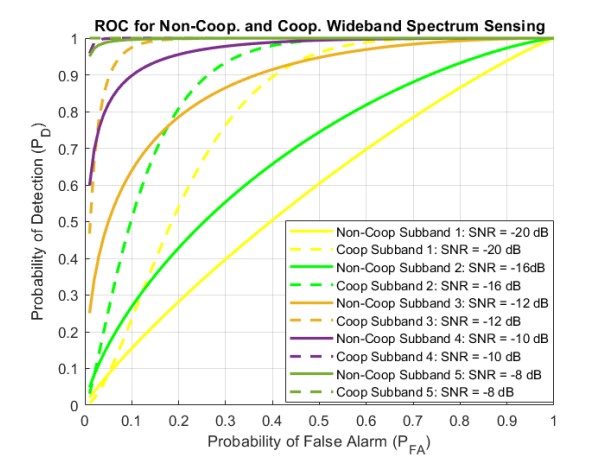
Figure 8. Plot of PD versus PFA for 1 CR and 6 CRs at K =2 under varying SNR
The receiver operating characteristics for 6CRs at k=2 and a single CR of Figure 8 show that cooperative sensing only performs better than single cooperative sensing, especially at an improved SNR and higher PFA. It can be observed from the plot that non-cooperative sensing tends to have an initial detection compared to cooperative sensing, mainly at a very poor SNR and very low PFA of 0,01. We observed that 6CRs with k=2 provide better detection and robustness to the system, as against 3CRs with k =2.
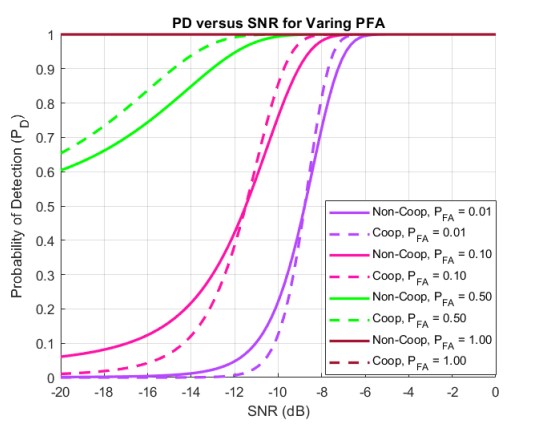
Figure 9. Plot of PD versus SNR for 1CR and 3CRs at k=2 across varying PFA
In Figure 9, non-cooperative sensing shows a higher PD than cooperative sensing, especially at lower PFA values of 0.1 and 0,01. The cooperative mechanism might not optimally handle information fusion due to the combination of suboptimal data. So, the choice of k=2 for 3CRs might be sub-optimal, especially at an increased poor SNR. In addition, at very low SNRs (-20, -16 dB), all curves start near zero, indicating that cooperative and non-cooperative methods struggle to detect signals under deplorable noise conditions. As SNR approaches 0dB, both methods of detection probabilities increase as the noise level becomes negligible with the signal strength.
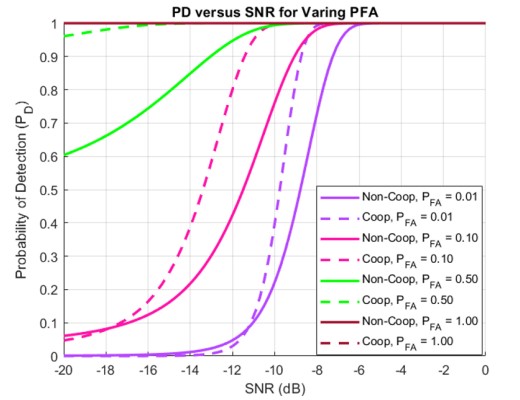
Figure 10. Plot of PD versus SNR for 1CR and 6CRs at k=2 across varying PFA
In Figure 10, with 6CRs and k=2, PD showed a little improvement than the 3CRs with k=2. The low SNR ratio affected the performance of cooperating sensing, especially at very low false alarm probability. The cooperative sensing showed an enhanced PD at very low SNR and a higher false alarm rate of 0.5 and 1. However, as SNR improves at 0dB, both sensing strategies increase their detection performance. Increasing the number of CRs provides more diversity and redundancy, as it reduces the impact of individual noise and the likelihood of error propagation.’ The plots visualize how SNR impacts detection performance in spectrum sensing applications, which is critical for cognitive radio functionality in next-generation networks.
5. CONCLUSION
This study highlights the advantages of energy detectors in improving wideband spectrum sensing within cognitive radio networks, a key factor for achieving efficient spectrum utilization in the complex 5G era [22]. By examining both non-cooperative and cooperative spectrum sensing strategies using energy detection (ED) methods in an Additive White Gaussian Noise (AWGN) channel, assumed to be identically and independently distributed (i.i.d.), we observed varied outcomes. While ROC curve analysis demonstrates that cooperative sensing significantly enhances detection performance in scenarios with very low signal-to-noise ratio (SNRs) and higher false alarm rates (between 0.5 and 1), the performance was inconsistent at very low false alarm rates (0.01 and 0.1). The result showed that although cooperative sensing offers benefits in certain conditions, it does not consistently outperform non-cooperative methods, particularly in environments with very low SNR.
Implementing the K-out-of-N rule within cooperative strategies effectively improves detection accuracy and reliability under challenging conditions, particularly in dense 5G networks with high traffic and diverse IoT applications, where efficient and dependable spectrum management is critical. However, the variability in performance across different false alarm rates points to further refinement of these techniques to adapt to the diverse operational environments in 5G networks.
Future research will focus on optimizing cooperative wideband spectrum sensing strategies, including incorporating diversity schemes in the energy detection process to enhance SNR and improve detection capabilities. Additionally, integrating machine learning algorithms to dynamically determine the optimal ‘k’ value with minimal human intervention could significantly improve the autonomy of cognitive radio networks. These improvements are vital for managing the radio spectrum effectively and enabling dynamic spectrum access in increasingly complex 5G and beyond environments where traditional methods may fall short.
REFERENCES
[1] O. M. Khodayer Al-Dulaimi, M. K. Hassan Al-Dulaimi and A. M. KhodayerAl-Dulaimi, “Cognitive Radio Technologies and Applications in Dynamic Spectrum Access Method,” 2022 IEEE 9th International Conference on Problems of Infocommunications, Science, and Technology (PIC S&T), Kharkiv, Ukraine, 2022,
[2] A. Chaturvedi, K. Prasad, S. K. Jha, V. Srinivas, N. Anil Kumar and V. Dankan Gowda, “Approaches for Advanced Spectrum Sensing in Cognitive Radio Networks,” 2023 7th International Conference on Intelligent Computing and Control Systems (ICICCS), Madurai, India, 2023, pp. 1485-1490, doi: 10.1109/ICICCS56967.2023.10142500.
[3] E. Kasem, D. Lekomtcev and R. Marsalek, “Cooperative spectrum sensing in real channel conditions,” 2015 13th International Conference on Telecommunications (ConTEL), Graz, Austria, 2015, pp. 1-6, doi: 10.1109/ConTEL.2015.7231192
[4] H. Tangsen, L. Xiaowu and C. Qingjiao, “Research on an Evaluation Algorithm of Sensing Node Reliability in Cognitive Networks,” in IEEE Access, vol. 8, pp. 11848-11855, 2020, doi: 10.1109/ACCESS.2020.2965292
[5] A. Singh Kushwah and V. Nigam, “Evaluation of Hard Fusion Sensing Techniques under AWGN and Rayleigh Flat-fading channel for Cognitive Radio Network,” 2022 IEEE 11th International Conference on Communication Systems and Network Technologies (CSNT), Indore, India, 2022, pp. 493-498,
[6] C. M. Dharmapuri and B. V. R. Reddy, “Performance Analysis of Different Fusion Rules for Cooperative Spectrum Sensing in Cognitive Radio Communication,” 2023 10th International Conference on Computing for Sustainable Global Development (INDIACom), New Delhi, India, 2023, pp. 1061-1064.
[7] Trigka M, Dritsas E. An Efficient Distributed Approach for Cooperative Spectrum Sensing in Varying Interests Cognitive Radio Networks. Sensors. 2022; 22(17):6692. https://doi.org/10.3390/s22176692
[8] Gupta, V., Beniwal, N.S., Singh, K.K. et al. Optimal cooperative spectrum sensing for 5G cognitive networks using evolutionary algorithms. Peer-to-Peer Netw. Appl. 14, 3213–3224 (2021). https://doi.org/10.1007/s12083-021-01159-6
[9] Mengistu, F.G., Melesse, G.A. (2023). Detection Performance Analysis of Cooperative Spectrum Sensing UFMC-Based Cognitive Radio for 5G System. In: Arai, K. (eds) Proceedings of the Future Technologies Conference (FTC) 2023, Volume 1. FTC 2023. Lecture Notes in Networks and Systems, vol 813. Springer, Cham. https://doi.org/10.1007/978-3-031-47454-5_33
[10] J. Kim and J. P. Choi, “Sensing Coverage-Based Cooperative Spectrum Detection in Cognitive Radio Networks,” in IEEE Sensors Journal, vol. 19, no. 13, pp. 5325-5332, 1 July1, 2019, doi: 10.1109/JSEN.2019.2903408.
[11] Dikmese, S., Lamichhane, K. & Renfors, M. Novel filter bank-based cooperative spectrum sensing under practical challenges for beyond 5G cognitive radios. J Wireless Com Network 2021, 30 (2021). https://doi.org/10.1186/s13638-020-01889-w
[12] Rangaraj, N., Jothiraj, S. & Balu, S. Hybrid Optimized Secure Cooperative Spectrum Sensing for Cognitive Radio Networks. Wireless Pers Commun 124, 1209–1227 (2022). https://doi.org/10.1007/s11277-021-09402-2
[13] B. Suseela and D. Sivakumar, “Non-cooperative spectrum sensing techniques in cognitive radio-a survey,” 2015 IEEE Technological Innovation in ICT for Agriculture and Rural Development (TIAR), Chennai, India, 2015, pp. 127-133, doi: 10.1109/TIAR.2015.7358544
[14] Y. Zheng, Y. Xia, and H. Wang, “Spectrum Sensing Performance Based on Improved Energy Detector in Cognitive Radio Networks,” 2020 IEEE International Conference on Artificial Intelligence and Computer Applications (ICAICA), Dalian, China, 2020, pp. 405-408, doi: 10.1109/ICAICA50127.2020.9181901.
[15] P. Semba Yawada, An Jian Wei and M. Mbyamm Kiki, “Performance evaluation of energy detection based on non-cooperative spectrum sensing in cognitive radio network,” 2015 4th International Conference on Computer Science and Network Technology (ICCSNT), Harbin, China, 2015, pp. 1036-1040, doi: 10.1109/ICCSNT.2015.7490914.
[16] C. Bin Ali Wael, N. Armi and R. Sariningrum, “Wideband spectrum sensing using Welch periodogram in cognitive radio,” 2015 International Conference on Radar, Antenna, Microwave, Electronics and Telecommunications (ICRAMET), Bandung, Indonesia, 2015, pp. 104-108, doi: 10.1109/ICRAMET.2015.7380783
[17] S. Srinu, S. L. Sabat and S. K. Udgata, “Wideband spectrum sensing based on energy detection for Cognitive Radio Network,” 2011 World Congress on Information and Communication Technologies, Mumbai, India, 2011, pp. 651-656, doi: 10.1109/WICT.2011.6141322.
.[18] C. Muñoz, Ernesto, P. Martínez, L. Fernando, P. Parra, and I. Patricia, “Cooperative Energy Spectrum Sensing for Mobile Cognitive Radio Networks using SDR,” 2020 IEEE Colombian Conference on Communications and Computing (COLCOM), Cali, Colombia, 2020, pp. 1-6, doi: 10.1109/COLCOM50121.2020.9219770.
[19] K. Sinha and Y. N. Trivedi, “Cooperative Spectrum Sensing with Hard Decision Fusion Based on Modified Correlation Detection Scheme in Additive Laplacian Noise,” 2022 3rd International Conference on Smart Electronics and Communication (ICOSEC), Trichy, India, 2022, pp. 1-7, doi: 10.1109/ICOSEC54921.2022.9952119
[20] G. M. Salama and S. A. Taha, “Cooperative Spectrum Sensing and Hard Decision Rules for Cognitive Radio Network,” 2020 3rd International Conference on Computer Applications & Information Security (ICCAIS), Riyadh, Saudi Arabia, 2020, pp. 1-6, doi: 10.1109/ICCAIS48893.2020.9096740. (
[21] A. Ayoob, G. Khalil and Z. Ayoub, “Spectrum Sensing Using Cooperative Energy and Matched Filter Detectors in Cognitive Radio,” 2023 IEEE 15th International Conference on Computational Intelligence and Communication Networks (CICN), Bangkok, Thailand, 2023, pp. 45-49, doi: 10.1109/CICN59264.2023.10402267.)} 10, No. 5, pp120-122.
[22] B.C. Dike, C.M. Akujuobi, S.H. Alam, “A Study of Cooperative and Non-cooperative Wideband Spectrum Sensing Radio Networks in the Cognitive Radio 5G Era,” 10th Int. Conf. on Networks & Communications (NWCOM 2024), Sydney, Australia, Oct. 19-20, 2024, p.31-48, 2024 CS&ITCSCP 2024, DOI: 10.5121/csit.2024.141903.
ACKNOWLEDGMENTS
This research work was partly supported by funding from the NSF, account number 424300- 00001, and DoE.
AUTHORS

Dike, Blessing Chinemerem is a PhD student of Electrical Engineering with a concentration in wireless communication and artificial intelligence (AI) in the Electrical and Computer Engineering Department at Prairie View A&M University (PVAMU), TX, USA. She is profoundly interested in data and network infrastructure, specializing in networking, cybersecurity, wireless communication, and data engineering. With a solid academic background in Electrical Engineering and a commitment to research excellence, Blessing aims to contribute significantly to the understanding and development of robust and efficient network systems. Her current research explores cutting-edge solutions for optimizing data transmission and security in 5G and beyond networks.

CAJETAN M. AKUJUOBI, P.E., isanElectrical and Computer Engineering Professor and the former Vice President for Research and Dean of Graduate Studies at Prairie View A&M University (PVAMU). He is the founder and the Executive Director of the Center of Excellence for Communication Systems Technology Research (CECSTR) at PVAMU.He is the founder and Principal Investigator of the SECURE Cybersecurity Center of Excellence at PVAMU. His research interests are Broadband Communication Systems, Cyber Security, Mixed Signals Systems, Compressive Sensing, Signal/Image/Video Processing and Communication Systems. He is a Life Senior member of IEEE, a Senior Member of ISA, a Member of the American Society for Engineering Education (ASEE), a Member of Sigma XI, the Scientific Research Society, and the Texas Society for Biomedical Research (TSBR) Board of Directors and other professional organizations.
Prof. Akujuobi is the author of many books and book chapters. He has published over 100 peer-reviewed papers and journals. He received a B.S. in Electrical and Electronics Engineering from Southern University, Baton Rouge, Louisiana, in 1980. M.S. in Electrical and Electronics Engineering, Tuskegee University, Tuskegee, Alabama, 1983. M.B.A., Hampton University, Hampton, Virginia 1987. Ph.D. Electrical Engineering, George Mason University, Fairfax, Virginia 1995.

Dr. Shumon Alam is a Lead Researcher at the SECURE Center of Excellence at Prairie View A&M University. Before this position, he held various engineering positions in the industry. He also worked as a researcher for many years in academia. Alam worked in control, communication systems, network architecture, and signal processing. His research interests are cybersecurity, the Internet of Things (IoT), and artificial intelligence (AI).

 International Journal of Computer Networks & Communications (IJCNC)